The short answer
What should you know before bidding on a storage unit auction?
Storage auctions are state-law lien sales: the sale is advertised first, and the tenant can pay and cancel it (in Texas and Florida, right up until the sale). You bid from the doorway on the whole unit, pay a buyer's premium (15% on Lockerfox and Bid13), tax if charged and a cleaning deposit, then empty it in 24-72 hours.
- You can't step inside before you win: bid from the doorway on what you can see, and it's the whole unit or nothing.
- Your bid isn't your price: Lockerfox and Bid13 add a 15% buyer's premium (a $120 win costs $18 more), plus tax if charged and a cleaning deposit, typically $50-$100.
- In Texas and Florida the tenant can pay and stop the sale right up until it happens; in California, until the date in the sale notice.
- You usually get 24-72 hours, set by the facility, to pay and empty the unit broom-swept, and cherry-picking can get you suspended on StorageTreasures.
- Personal papers and photos go back to the facility; in Washington State they aren't part of the sale at all.
Chapters (16)
Storage unit auctions run on state law and on each auction site's own rules, and a few of them decide whether you make money: you can't step inside, your bid isn't your price, and you bought everything in the unit. Here are nine of them, checked against state statutes and the auction sites' and storage companies' own pages on Oct 28, 2026, plus what storage-unit finds actually sold for on eBay in October 2026. This isn't legal advice, and the rules change by state.
How does a storage unit end up at auction?
A storage unit goes to auction because of a lien: when you rent a unit, state law gives the facility a lien on everything inside, and unpaid rent makes that stuff the security for the debt. Nothing gets sold overnight. There's notice after notice first.
How fast it starts depends on the state. In Florida, the facility can lock a tenant out 5 days after the rent is due. In California, 14 days unpaid starts the process. New York gives the tenant at least 30 days to pay after the notice is mailed.
Where are storage unit auctions advertised?
The sale has to be advertised first, and your local paper's legal notices and the big auction sites are where to look. In Texas and Florida, the law says the sale is advertised in a newspaper once a week for two weeks. California allows one newspaper ad plus an auction website, where it has to stay up for seven days. All three states let the sale itself happen online.
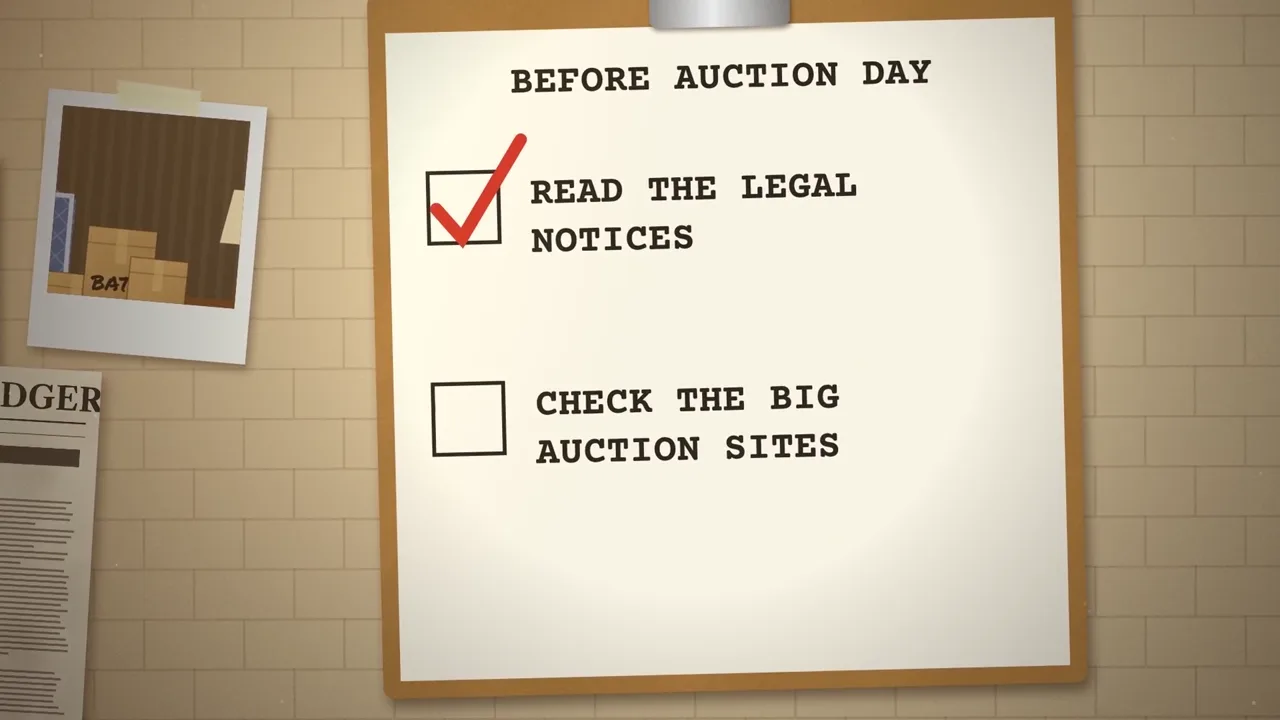
Lockerfox says that in many cases it won't show the photos or allow bidding until the first notice runs in the local paper. So read your paper's legal notices, and check the big auction sites.
Can the tenant still pay and cancel the auction?
Yes. In Texas and Florida, the law lets the tenant pay right up until the sale. In California, it's up to the date in the sale notice.
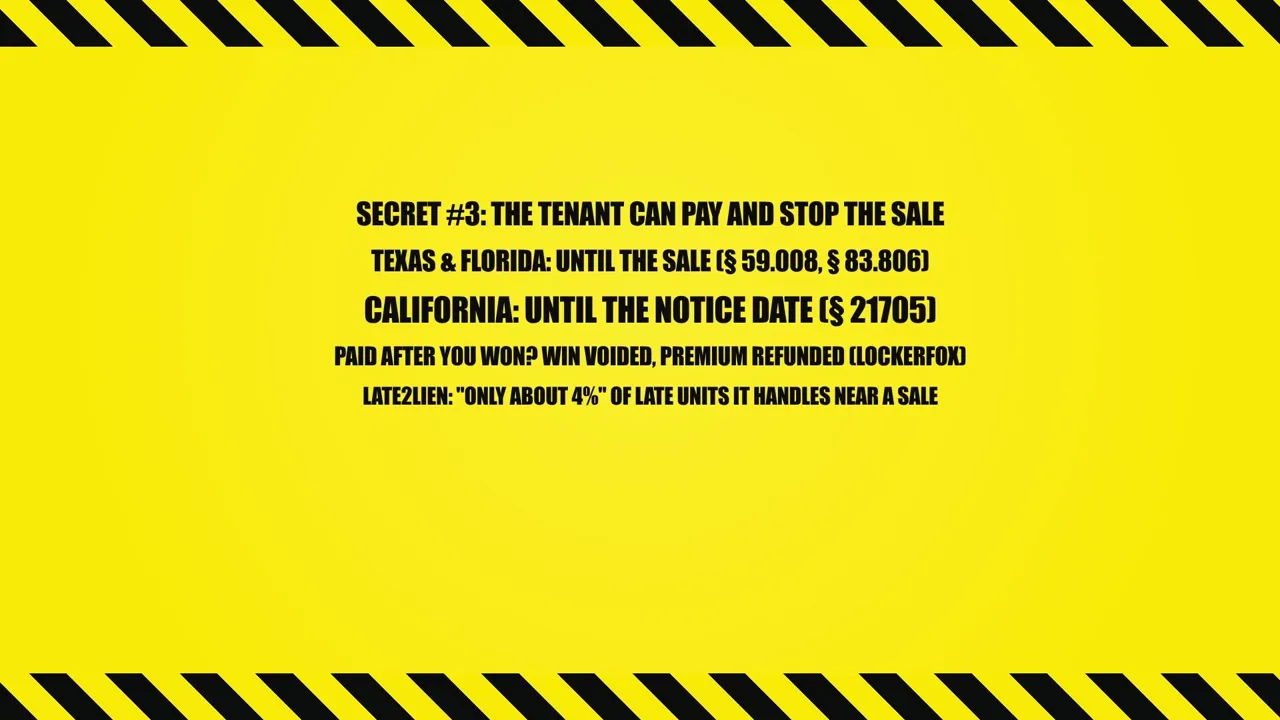
It can even happen after you win. On Lockerfox, if the tenant pays after the auction closes but before you pick up the unit, the facility voids your win and the buyer's premium you were charged is refunded. One company that handles lien notices, Late2Lien, says only about 4% of the late units it handles ever even get close to a sale. That's one company's figure, not a national number, but it's a good reason to call before you drive across town.
Here are the three states side by side:
| Rule | Texas | Florida | California |
|---|---|---|---|
| How the sale is advertised | Newspaper, once a week for 2 weeks | Newspaper, once a week for 2 weeks | One option: newspaper once, plus 7 days on an auction website |
| Sale can be held online | Yes | Yes | Yes |
| Tenant can pay and stop it | Until the sale | Until the sale | Until the date in the sale notice |
| Good-faith buyer protected from the tenant's claims | Yes | Yes | Yes |
| Extra money from the sale held for the tenant | 2 years | 2 years | 1 year |
Can you go inside a storage unit before you bid?
No. At most auctions you can't step inside, open a box or touch anything until you've won. You bid from the doorway. Extra Space's tip: shine a flashlight in, and skip units that smell strongly of smoke, moisture or mildew.
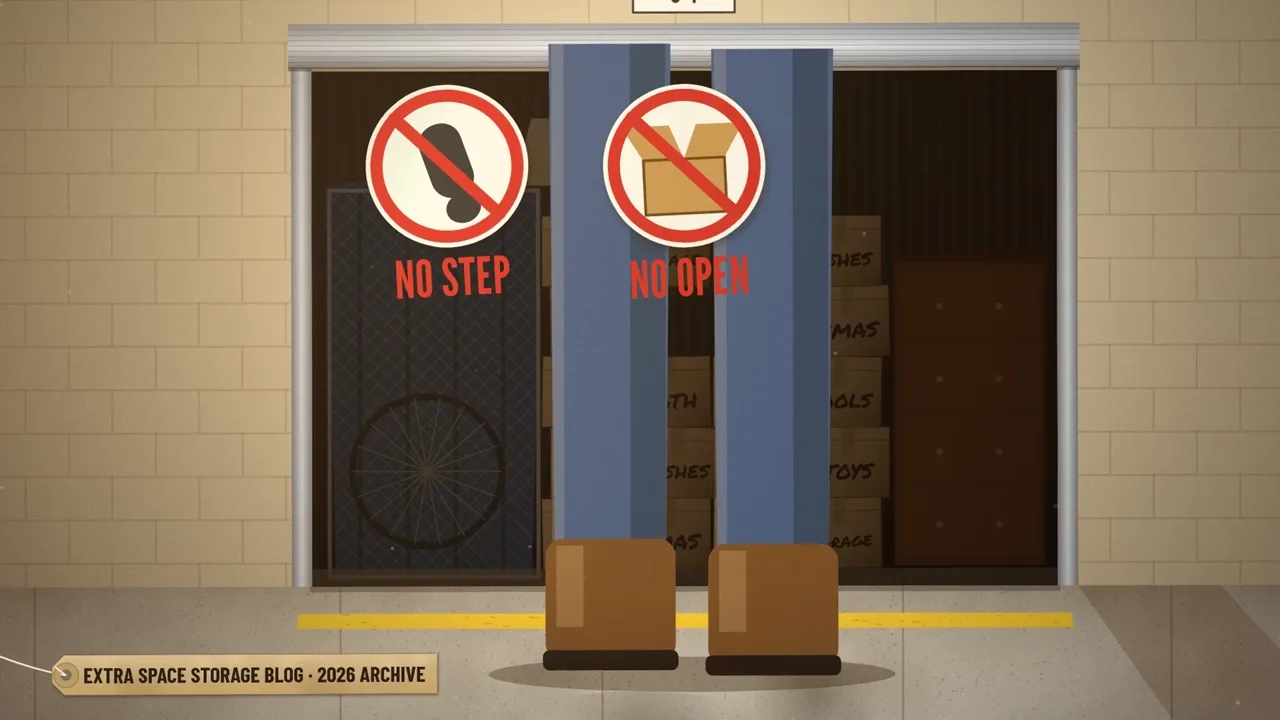
Online, you're bidding off photos and a video, and Bid13 says to bid on the value of what's visible, not on what might be hidden in the back. It's also the whole unit or nothing: you can't buy one item out of it. And if you win online and the unit doesn't match the photos, StorageTreasures says don't cross the threshold or touch anything. Once you touch or remove an item, the whole cleanout is yours.
How much does a storage unit really cost on top of your bid?
More than your bid. The online sites add a buyer's premium, and the facility collects the rest in person.
| Cost | Lockerfox's example | Notes |
|---|---|---|
| Winning bid | $120 | Paid to the facility |
| Buyer's premium | $18 (15%) | Lockerfox and Bid13 both charge 15% |
| Sales tax | If the facility charges it | Each facility decides; not every one waives it for a resale certificate |
| Cleaning deposit | Typically $50-$100 (Extra Space) | Refundable once the unit is empty and broom-swept; often cash |
If you buy to resell, bring your resale certificate, but not every facility will waive the tax. Check with a tax pro on that one.
Can you back out of a storage auction bid?
No. A win is a contract. Every bid on Lockerfox is an agreement to buy the unit and empty it, and on StorageTreasures you can't take a bid back.
Sniping doesn't work on Lockerfox either: a bid in the last two minutes resets the clock to two minutes. On Bid13, with a max bid, you pay just a dollar over the runner-up. In Bid13's own example, a $100 max beats an $80 max at $81.
There's good news in the law, too. In Texas, Florida and California, a good-faith buyer keeps the goods, safe from the tenant's claims, even if the facility messed up the paperwork. And if a unit sells for more than the tenant owed, the extra money is held for the tenant to claim, for one to two years in those three states.
Do storage facilities take the valuables out first?
Extra Space calls that a misconception, but some things can be pulled before the sale because the facility isn't allowed to sell them, like firearms, vehicles or boats. Extra Space also says plainly there's no guarantee a unit holds anything valuable.
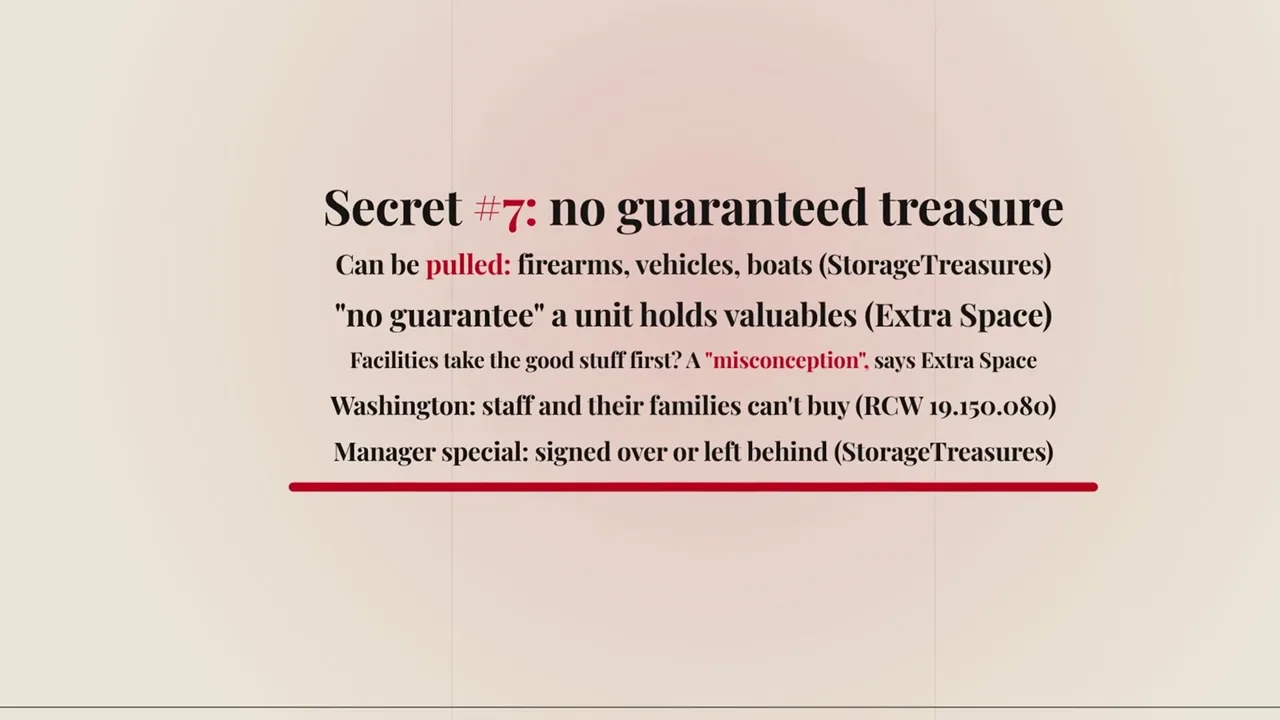
In Washington State, facility staff and their families can't even buy the units. You'll also see "manager specials." That's not a lien sale: it's a unit the tenant signed over to the facility, or stuff left behind.
What storage unit finds sell on eBay?
From the doorway, look for a toolbox, a vintage stereo, game consoles and kitchen boxes. Here's what those sold for on eBay in October 2026. "One sale" is a single listing, not a typical price.
| Item | One sale | Most sold for | Sold (2026) | What to look for |
|---|---|---|---|---|
| Snap-on 3/8 hand ratchets, used | $49.99, FL80 with a broken selector (Oct 27) | $35-$100 (4 of 5 sales) | Oct 27 | The toolbox in the garage corner |
| 1970s Pioneer receivers, silver face | $2,250, SX-1080, 16 bids (Oct 22) | $150-$750 (15 of 17) | Oct 17-27 | Silver face in a wood case; a later black-face SX-201 sold for $49 (Oct 23) |
| Nintendo GameCube, tested, with controller | $199.95 with WaveBird wireless controller (Oct 26) | $85-$140 (12 of 16) | Oct 21-27 | Tested, controller included |
| Original Game Boy, working | $46 for parts, 20 bids (Oct 22) | $60-$120 (7 of 8) | Oct 21-24 | Even broken ones sell |
| KitchenAid Artisan mixer, used | $299.99, tangerine (Oct 24) | $100-$200 (9 of 13) | Oct 14-27 | Trendy colors; shipping ran $43.55-$118.05, so price it in or sell locally |
| Postwar Lionel engine with tender | - | $30-$60 (10 of 13) | Oct 20-27 | Common, modest money |
| Vintage Christmas blow molds | - | $20-$80 (20 of 23) | Oct 13-25 | Big ones cost about $40-$150 to ship |
The $2,250 Pioneer is one sale, not the norm. The more useful number is the range: most 1970s silver-face receivers sold for about $150 to $750.
Once you've sorted the unit, EasyFlip writes the eBay listing for each item from a few photos: title, description, item specifics and a suggested price.
What do you do with personal papers and photos in a storage unit?
They go back to the facility. Birth certificates, tax returns, bank records, photo albums, even cremated remains: StorageTreasures, Extra Space and iBid4Storage all say they go back to the facility so they can get back to the tenant.
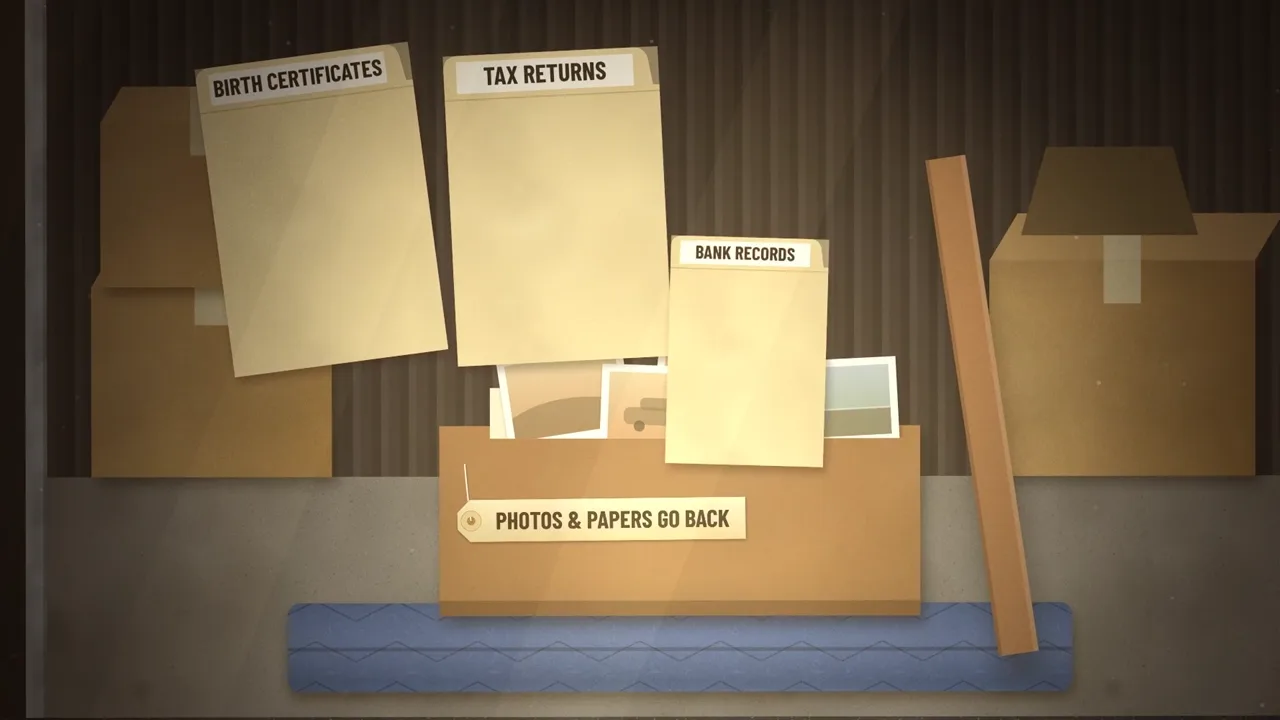
In Washington State, personal papers and photos aren't even part of the sale: the facility keeps them for six months for the tenant to reclaim. Somebody lost this unit in a bad month. Treat their photos the way you'd want yours treated.
How long do you have to clean out a storage unit after you win?
Usually 24 to 72 hours, set by the facility, to pay and empty it, broom-swept. Lockerfox says up to 72 hours (48 or less in some auctions); Extra Space and iBid4Storage say 24 to 48.
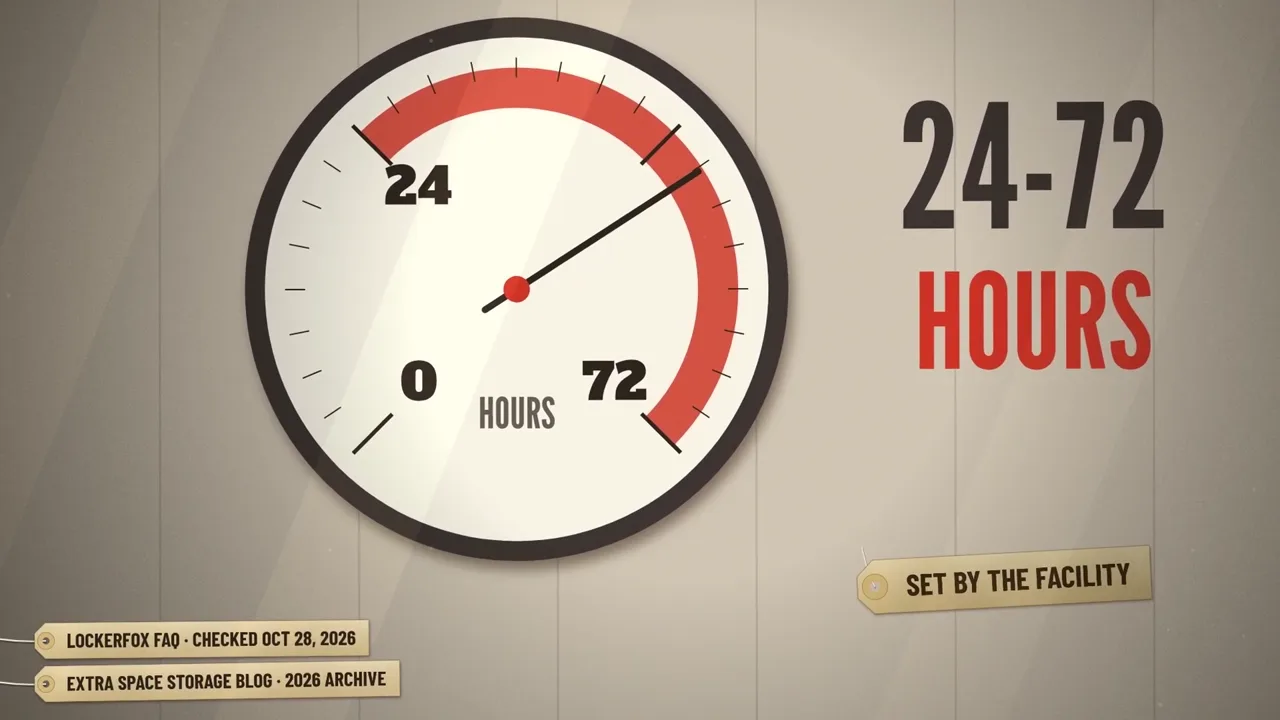
Usually you can't use the facility's dumpster (you can ask). And if you take the good stuff and leave the rest, StorageTreasures calls that cherry-picking, and it can get you suspended. So plan for the ordinary stuff, the truck, the dump run and your time before you raise your hand.
The bottom line
This week, before you bid on a unit: read the legal notices, call the facility before you drive out, and add the 15% premium, tax and a cash deposit to your number. Bid only on what you can see from the doorway, and plan to haul out all of it in a day or two. The unit doesn't make you money. The listings do.
Lien rules change by state, so check your own state's law, and talk to a tax pro about sales tax. For what's selling every week, the free Easy Flip newsletter goes out every Monday.
Questions people ask
Can you go inside a storage unit before bidding?
No. At most storage auctions you can't step inside, open a box or touch anything until you've won, so you bid from the doorway or, online, from photos and a video. Extra Space suggests shining a flashlight in and skipping units that smell of smoke or mildew.
How much is the buyer's premium on storage unit auctions?
Lockerfox and Bid13 both charge a 15% buyer's premium, so a $120 win on Lockerfox costs $18 more (checked Oct 28, 2026). Other sites charge different amounts, and the facility may also charge sales tax and a refundable cleaning deposit.
What happens if the tenant pays after I win a storage auction?
On Lockerfox, if the tenant pays after the auction closes but before you pick up the unit, the facility voids your win and the buyer's premium charged to your card is refunded. Call the facility before you drive out.
How long do you have to clean out a storage unit after winning?
Usually 24 to 72 hours, set by the facility. Lockerfox says up to 72 hours (48 or less in some auctions), and Extra Space and iBid4Storage say 24 to 48. The unit has to be emptied and broom-swept to get your deposit back.
What do you do with personal papers and photos found in a storage unit?
Return them to the facility so they can get back to the tenant. StorageTreasures, Extra Space and iBid4Storage all say so, and in Washington State personal papers and photos aren't part of the sale; the facility keeps them for six months.
Where can I find storage unit auctions near me?
Check your local newspaper's legal notices and the big online auction sites. Texas and Florida require a newspaper ad once a week for two weeks, and Texas, Florida and California all allow the sale itself to be held online.
Sources
Prices are eBay sold listings, and every fact below was checked on October 28, 2026.
- Texas Property Code ch. 59 (self-service storage liens)
- Florida Statutes 83.801-83.809 (Self-Storage Facility Act)
- California Business and Professions Code 21700-21716 (text as of Jan 2026)
- New York Lien Law 182
- Washington RCW 19.150 (self-service storage facilities)
- Lockerfox FAQ
- Bid13 FAQ
- StorageTreasures Buyer FAQs (2025 copy)
- Extra Space Storage, common myths about storage auctions (2026 copy)
- iBid4Storage, personal and legal documents
- iBid4Storage, how storage auctions work
- Late2Lien's "about 4%", quoted by Cubby Storage
- eBay sold listings (Sold + Completed, US sellers), sales Oct 13-27, 2026
Read the full video transcript
One storage unit video on YouTube has more than eight hundred thousand views. The title says a boy paid forty dollars for a padlocked unit, appraised at four hundred sixty-three thousand. Its own description says, quote, "The story is fiction." The real rules are in state law, and one of them decides whether you make money: you don't get to step inside. Plus, the corner I'd check first. Something from it sold on eBay this week for forty-nine ninety-nine, broken. So today: nine storage unit auction secrets every reseller should know. Every rule checked against the state laws and the auction sites' and storage companies' own pages, and every price a real eBay sold listing. It's not legal advice, and the rules change by state. Let's jump right into it.
Secret number one: it all starts with a lien. When you rent a storage unit, state law gives the facility a lien on everything inside. Miss the rent, and that stuff becomes the security for the debt. In Florida, the facility can lock you out five days after the rent is due. In California, fourteen days unpaid starts the process. New York gives the tenant at least thirty days to pay after the notice. So nothing gets sold overnight. There's notice after notice first. Secret number two: the sale has to be advertised, and that's your treasure map. In Texas and Florida, the law says the sale gets advertised in a newspaper, once a week for two weeks. California allows one newspaper ad plus an auction website, where it has to stay up for seven days. And all three states let the sale itself happen online. Lockerfox even says that in many cases, it won't show the photos until the first notice runs in the local paper. So read your paper's legal notices, and check the big auction sites. Secret number three: the tenant can pay and stop the sale. In Texas and Florida, the law lets them pay right up until the sale. In California, it's up to the date in the sale notice. And on Lockerfox, if the tenant pays after the auction closes but before you pick it up, the facility voids your win, and Lockerfox refunds your buyer's premium. One company that handles lien notices says only about four percent of the late units it handles ever even get close to a sale. So call before you drive across town.
Quick thing before we keep going. If you've got a pile of stuff waiting to be listed, that's exactly why I built EasyFlip. Snap a few photos and it writes the whole eBay listing for you: title, description, item specifics, the category, even a price. You check it, tap publish, done. Link's down below.
Secret number four: you bid from the doorway. At most auctions, you can't step inside, open a box or touch anything until you've won. Extra Space's own tip: shine a flashlight in, and skip units that smell like smoke or mildew. Online, you're bidding off photos and a video, and Bid13 says it straight: bid on what's visible, not on what might be hidden in the back. And it's the whole unit or nothing. You can't buy one item out of it. One more from StorageTreasures: if you open the door and it doesn't match the photos, don't touch anything. Once you touch or remove an item, the whole cleanout is yours. Secret number five: your bid isn't your price. The online sites add a buyer's premium. Lockerfox and Bid13 charge fifteen percent, so a hundred-and-twenty-dollar win on Lockerfox costs you eighteen dollars more before you've paid the facility a cent. Then at the facility you pay the bid itself, plus sales tax if they charge it, plus a refundable cleaning deposit, often in cash. Extra Space says that deposit is typically fifty to a hundred dollars. If you buy to resell, bring your resale certificate, but not every facility will waive the tax. Check with a tax pro on that one. Secret number six: a win is a contract. Every bid on Lockerfox is an agreement to buy the unit and empty it, and on StorageTreasures you can't take a bid back. Sniping doesn't work either. On Lockerfox, a bid in the last two minutes resets the clock to two minutes. And on Bid13, with a max bid, you pay just a dollar over the runner-up. In their own example, a hundred-dollar max beats an eighty-dollar max at eighty-one. The good news: in Texas, Florida and California, a good-faith buyer keeps the goods, safe from the tenant's claims, even if the facility messed up the paperwork. And if a unit sells for more than the tenant owed, the extra money is held for the tenant to claim, for one to two years in those three states.
Secret number seven: there's no guaranteed treasure. Some things can be pulled before the sale because the facility isn't allowed to sell them, like guns, vehicles or boats. Extra Space says plainly there's no guarantee a unit holds anything valuable. And the rumor that facilities take the good stuff out first? Extra Space says that's a misconception, and in Washington State, staff and their families can't even buy the units. You'll also see manager specials. That's not a lien sale. It's a unit the tenant signed over to the facility, or stuff left behind. So here's what I look for from the doorway, starting with the garage corner: a toolbox. Used Snap-on three-eighths hand ratchets sold on eBay on October twenty-seventh for about thirty-five to a hundred dollars. And that broken one, with a selector that doesn't work? Forty-nine ninety-nine. Next, a stereo. Look for a silver-faced Pioneer receiver in a wood case. Most nineteen-seventies ones sold for about a hundred fifty to seven hundred fifty dollars this month. One SX-ten-eighty went for twenty-two fifty, with sixteen bids. That's one sale, not the norm. And a later all-black Pioneer? This one sold for forty-nine dollars. Then the game consoles. A tested GameCube with a controller sold for about eighty-five to a hundred forty this month. Add a WaveBird wireless controller, and one bundle went for a hundred ninety-nine ninety-five. An original Game Boy that works, about sixty to a hundred twenty, and one sold for parts still brought forty-six dollars. And the kitchen boxes. A used KitchenAid Artisan mixer sold mostly for a hundred to two hundred dollars, and the trendy colors, like this tangerine one, about three hundred. But shipping on those ran forty to a hundred twenty dollars, so price that in, or sell it locally. Secret number eight: family photos and papers go back. Birth certificates, tax returns, bank records, photo albums, even cremated remains. StorageTreasures, Extra Space and iBid4Storage all say they go back to the facility so they can get back to the tenant. In Washington State, personal papers and photos aren't even part of the sale. The facility keeps them for six months. Somebody lost this unit in a bad month. Treat their photos the way you'd want yours treated. Secret number nine: you bought all of it. You usually get twenty-four to seventy-two hours, set by the facility, to pay and empty it, broom-swept. And usually, you can't use their dumpster. And if you take the good stuff and leave the rest, StorageTreasures calls that cherry-picking, and it can get you suspended. So plan for the ordinary stuff too. A common postwar Lionel engine with its tender sold for about thirty to sixty dollars this month. Most vintage Christmas blow molds, twenty to eighty, and the big ones cost forty to a hundred fifty dollars to ship. Do that math, with the truck, the dump run and your time, before you raise your hand. Because the unit doesn't make you money. The listings do.
So, the nine. It starts with a lien. The legal notices are your map. The tenant can pay and stop it. You bid from the doorway. Your bid isn't your price. A win is a contract. There's no guaranteed treasure, so look for the tools, the stereo, the consoles and the kitchen boxes. Papers and photos go back. And you bought all of it. So here's my question: would you bid on a unit you could only see from the doorway? Let me know down in the comments. And if this was worth your time, a like helps it get in front of more resellers. Have a blessed day.