The short answer
Which vintage Pokemon cards sell for the most on eBay?
Of 12 famous vintage cards checked on eBay's US sold listings (Nov 10, 2026), the Rayquaza Gold Star ranked first with a median sale of about $14,350, just ahead of Umbreon Gold Star (about $14,100) and the 1st Edition Base Set Charizard (about $11,000). The grade drives the price: the 1st Edition stamp alone made a PSA 7 Charizard over 30 times pricier.
- Rayquaza Gold Star topped the ten with a median eBay sale of about $14,350 (18 sales, Sep 26-Nov 8, 2026), $250 ahead of Umbreon Gold Star.
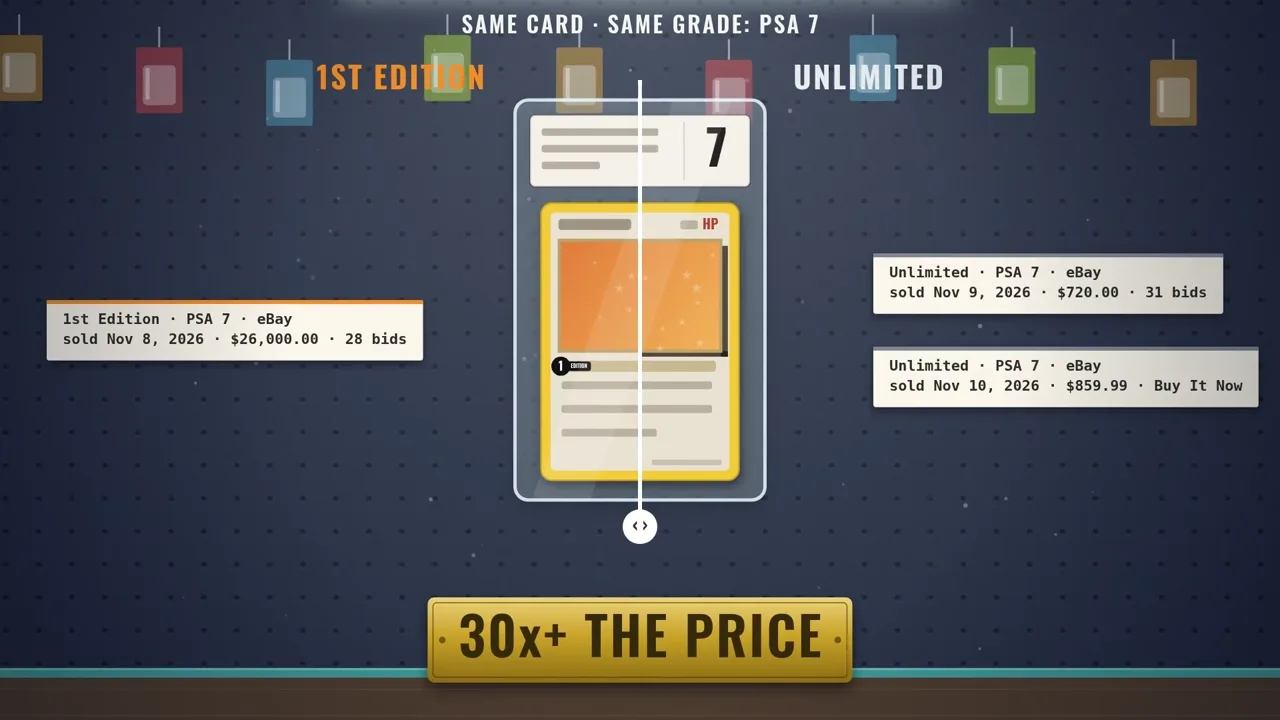
- Same card, same grade: a PSA 7 1st Edition Charizard sold for $26,000 on Nov 8, 2026, while two unlimited PSA 7s sold for $720 and $859.99.
- The plain unlimited Base Set Charizard shows up far more often: 20 sold on Nov 9-10, 2026, ungraded copies mostly $200-$525.
- A creased 1st Edition Lugia still sold for $1,075 with 53 bids on Nov 9, 2026: a crease costs a lot but doesn't make a card worthless.
- Five 'PSA 10' 1st Edition Charizards sold for $1,000-$17,000, less than a PSA 7: check every slab's cert number on the grader's own site.
Chapters (15)
I took 12 famous vintage Pokemon cards, pulled their real eBay sold listings in the US, and ranked the top 10 by the median of up to 20 of each card's newest sales, checked Nov 10, 2026. Below: all ten, what each one sells for ungraded and graded, how to spot it in an old binder, and the tiny mark that changes the price. The number one card isn't a Charizard.
A single big sale is one sale, not what your card is worth; the ranges are what most copies sold for.
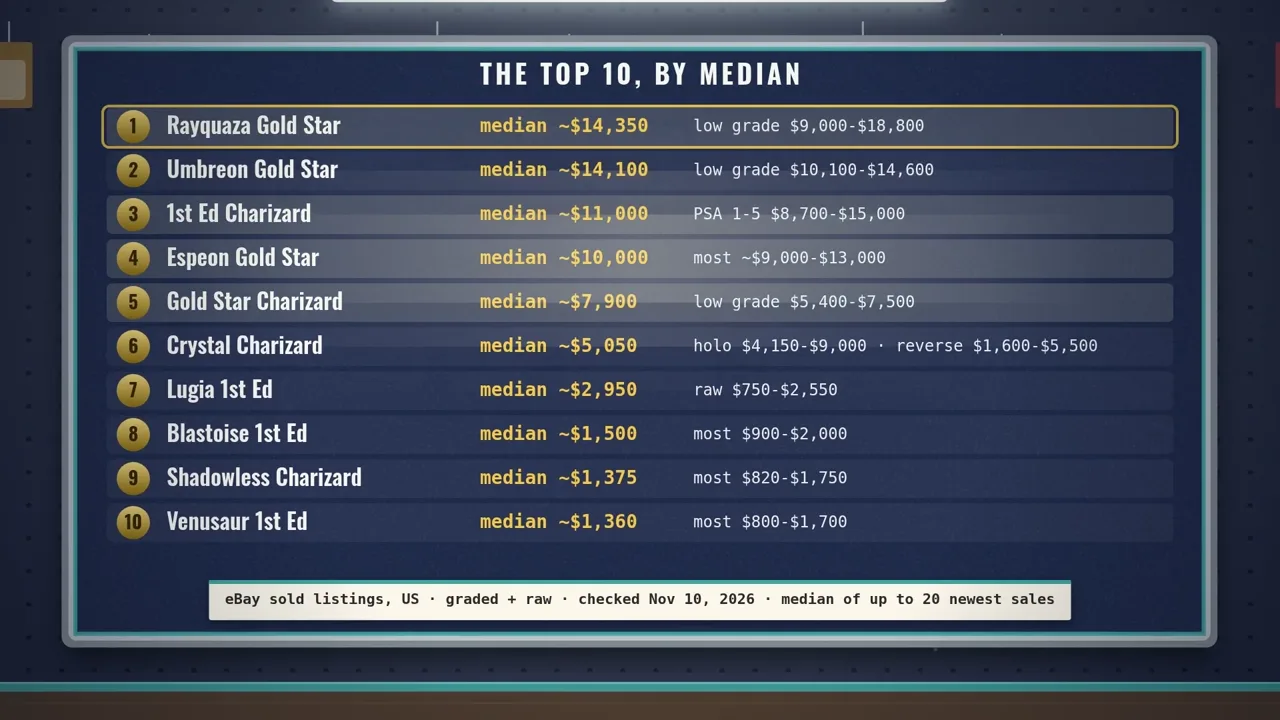
The top 10 Pokemon cards by eBay sold price
| # | Card | Median sale | Most copies sold for | Sales counted |
|---|---|---|---|---|
| 10 | Venusaur, Base Set 1st Edition | about $1,360 | $800-$1,700 (ungraded and low grade) | 20, Sep 2-Nov 8, 2026 |
| 9 | Charizard, Base Set shadowless | about $1,375 | $820-$1,750 (ungraded and low grade) | 20, Oct 12-Nov 10, 2026 |
| 8 | Blastoise, Base Set 1st Edition | about $1,500 | $900-$2,000 (ungraded and low grade) | 18, Oct 4-Nov 4, 2026 |
| 7 | Lugia, Neo Genesis 1st Edition | about $2,950 | $750-$2,550 (ungraded) | 20, Oct 23-Nov 10, 2026 |
| 6 | Crystal Charizard, Skyridge | about $5,050 | holo $4,150-$9,000; reverse foil $1,600-$5,500 | 20, Oct 11-Nov 9, 2026 |
| 5 | Charizard Gold Star, Dragon Frontiers | about $7,900 | $5,400-$7,500 (low-grade slabs) | 20, Oct 4-Nov 8, 2026 |
| 4 | Espeon Gold Star, POP Series 5 | about $10,000 | about $9,000-$13,000 | 19, Sep 13-Nov 8, 2026 |
| 3 | Charizard, Base Set 1st Edition | about $11,000 | $8,700-$15,000 (PSA 1-5) | 19, Sep 13-Nov 9, 2026 |
| 2 | Umbreon Gold Star, POP Series 5 | about $14,100 | $10,100-$14,600 (low grade and ungraded) | 17, Sep 25-Nov 10, 2026 |
| 1 | Rayquaza Gold Star, EX Deoxys | about $14,350 | $9,000-$18,800 (low grade) | 18, Sep 26-Nov 8, 2026 |
How were these cards ranked?
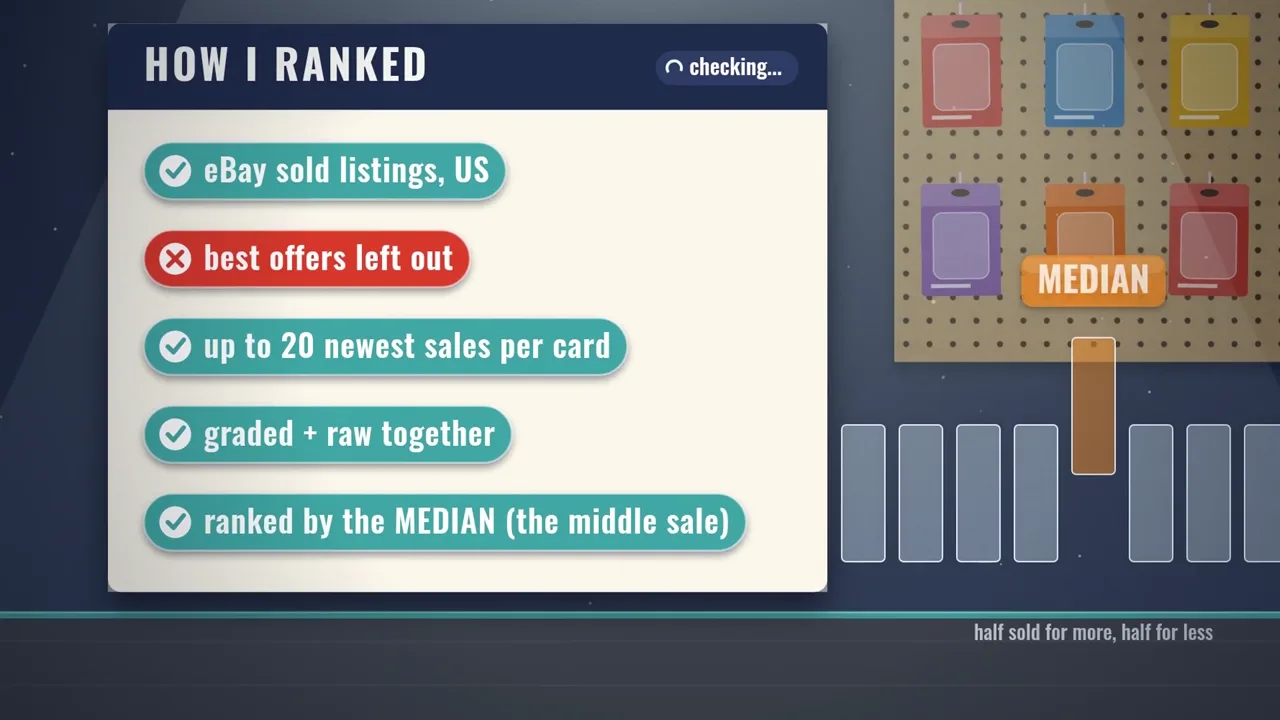
Every price is a real eBay sold listing in the US, checked Nov 10, 2026. Accepted best offers are left out, because the crossed-out price on those is what the seller asked, not what the buyer paid. For each card I took up to 20 of the most recent sales, graded and ungraded together, and ranked by the median, the sale right in the middle.
The grade is the whole game. The same card in a plastic slab with a 9 on it can sell for ten times what an ungraded copy gets: a 1st Edition Venusaur sold ungraded for $1,280 on Nov 2, 2026, and a PSA 9 sold for $13,000 on Nov 8. That's why the table also gives ungraded and low-grade ranges.
How much is a 1st Edition Venusaur worth? (No. 10)
Out of 20 recent sales, the median was about $1,360, and ungraded and low-grade copies went for $800 to $1,700. An ungraded one sold at auction on Nov 2, 2026 for $1,280 with 27 bids. A PSA 9 sold Nov 8 for $13,000, and a PSA 10, the top grade, sold for $37,000 on Aug 20, 2026. That last one is one sale.
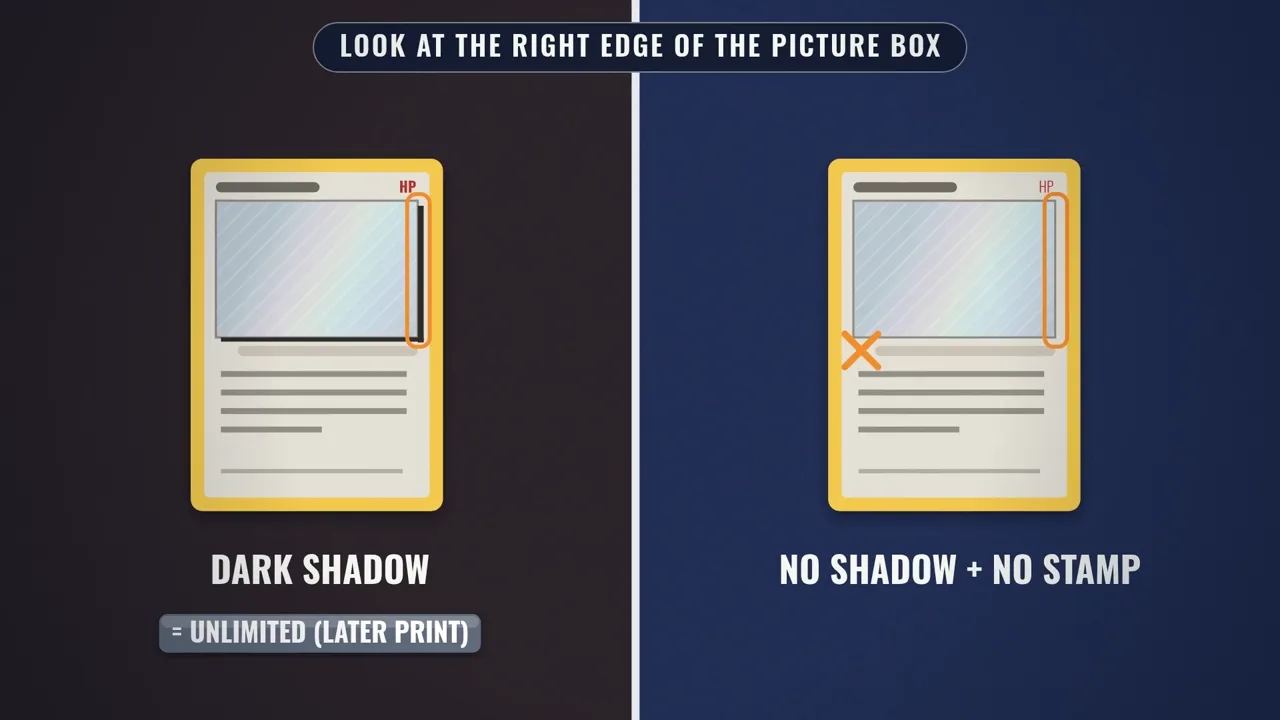
The card game came out in English in January 1999, made by Wizards of the Coast, and the first print run got a small black stamp, a 1 with the word Edition, just under the bottom left corner of the picture. From three feet away, Venusaur is the shiny one with the big flower on its back. Up close, check two things: the 1st Edition stamp at the left edge under the picture, and the right side of the picture box. 1st Edition cards have no dark shadow there.
What is a shadowless Charizard, and what does it sell for? (No. 9)
A shadowless Charizard is an early Base Set print with no 1st Edition stamp and no drop shadow beside the picture. After the 1st Edition run, Wizards kept printing without the stamp, and the early copies still had no shadow.
Twenty sold between Oct 12 and Nov 10, 2026, with a median of about $1,375. Ungraded and low-grade copies mostly went for $820 to $1,750. A raw one sold Nov 10 for $969.99 with 18 bids; another sold the same day for $1,736. A PSA 8 sold Nov 8 for $5,200 with 89 bids.
To tell them apart, look at the right edge of the picture box. A dark drop shadow there means it's the later, unlimited printing. No shadow and no stamp means shadowless. On the shadowless printing, the HP number in the top corner is also printed in a thinner font.
How much is a 1st Edition Blastoise worth? (No. 8)
Out of 18 recent sales, the median was about $1,500, and most ungraded and low-grade copies went for $900 to $2,000. A PSA 1, the lowest number PSA gives, still sold for $1,209 with 39 bids on Oct 18, 2026. A CGC 9.5 sold Nov 1 for $9,300, and a TAG 10 sold for $65,100 with 85 bids on Sep 16, 2026. That's one sale.
That jump from $1,500 to $65,100 is the grade: corners, edges, surface and centering (how even the yellow border is on all four sides). Tilt a binder copy under a light and look for scratches across the holo.
Is a creased 1st Edition Lugia still worth anything? (No. 7)
Yes. A creased, beat-up 1st Edition Lugia from Neo Genesis sold on eBay on Nov 9, 2026 for $1,075 with 53 bids. A crease costs you a lot, but it doesn't make the card worthless.
Neo Genesis came out in English in December 2000. Lugia is the big white and silver bird on a sparkly holo background, and the tell is the same 1st Edition stamp, at the left end of the strip just under the picture. Out of 20 recent sales, the median was about $2,950, and ungraded copies mostly went for $750 to $2,550. A raw copy that looks clean in the seller's photo sold at auction on Nov 8 for $6,200 with 73 bids (one sale), and a CGC 10 Pristine sold for $128,000 on Aug 31, 2026 (one sale).
Crystal Charizard: holo or reverse foil? (No. 6)
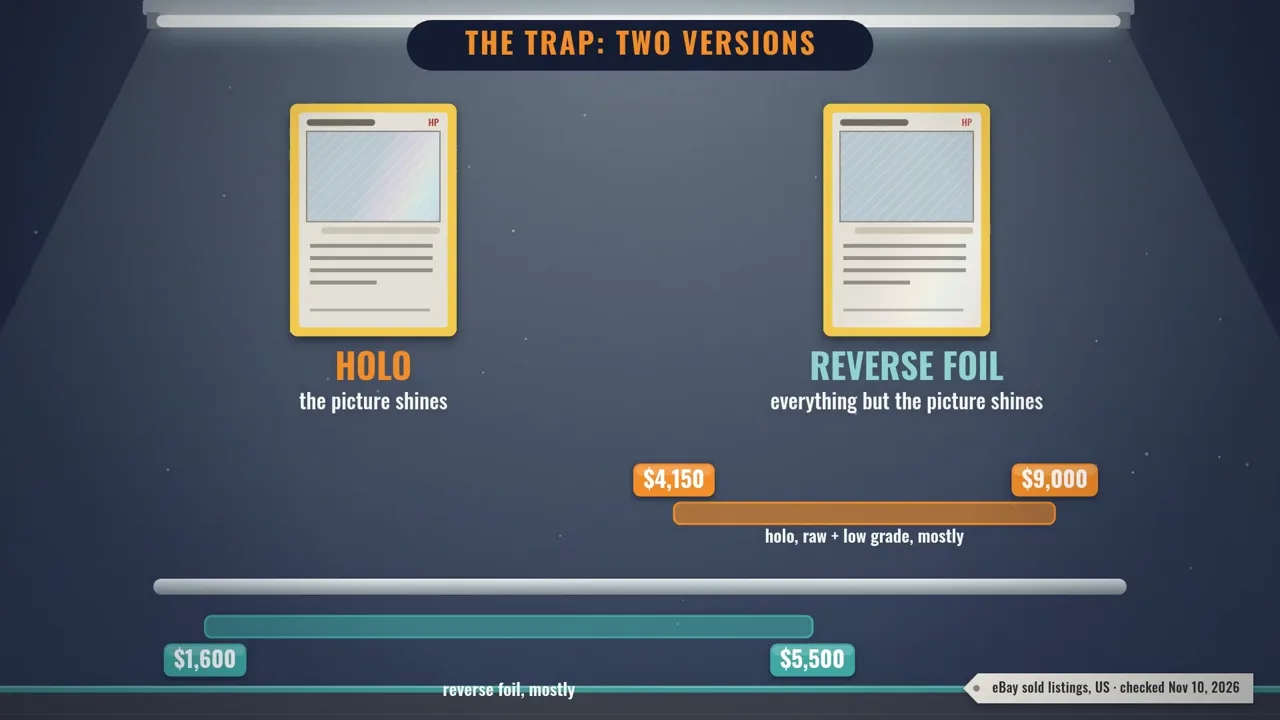
There are two versions of Crystal Charizard, and they sell very differently. On the holo, the picture shines; on the reverse foil, everything except the picture shines. Ungraded and low-grade holos mostly sold for $4,150 to $9,000, and reverse foils mostly for $1,600 to $5,500.
Crystal Charizard is from Skyridge, released in May 2003, the last set Wizards of the Coast ever made for Pokemon. The card number is 146/144, higher than the set size, which makes it a secret rare. Out of 20 recent sales, both versions together, the median was about $5,050. A PSA 1 holo sold Nov 8, 2026 for $5,100 with 27 bids; a PSA 1 reverse foil sold Nov 9 for $1,850. A raw holo sold Nov 8 for $9,000, and a CGC 10 Pristine sold for $125,000 on Aug 31 (one sale).
These do turn up in real life: a man in England found three Skyridge Charizards while clearing out his parents' attic, and the auction this year helped pay for his wedding.
How much is a Gold Star Charizard worth? (No. 5)
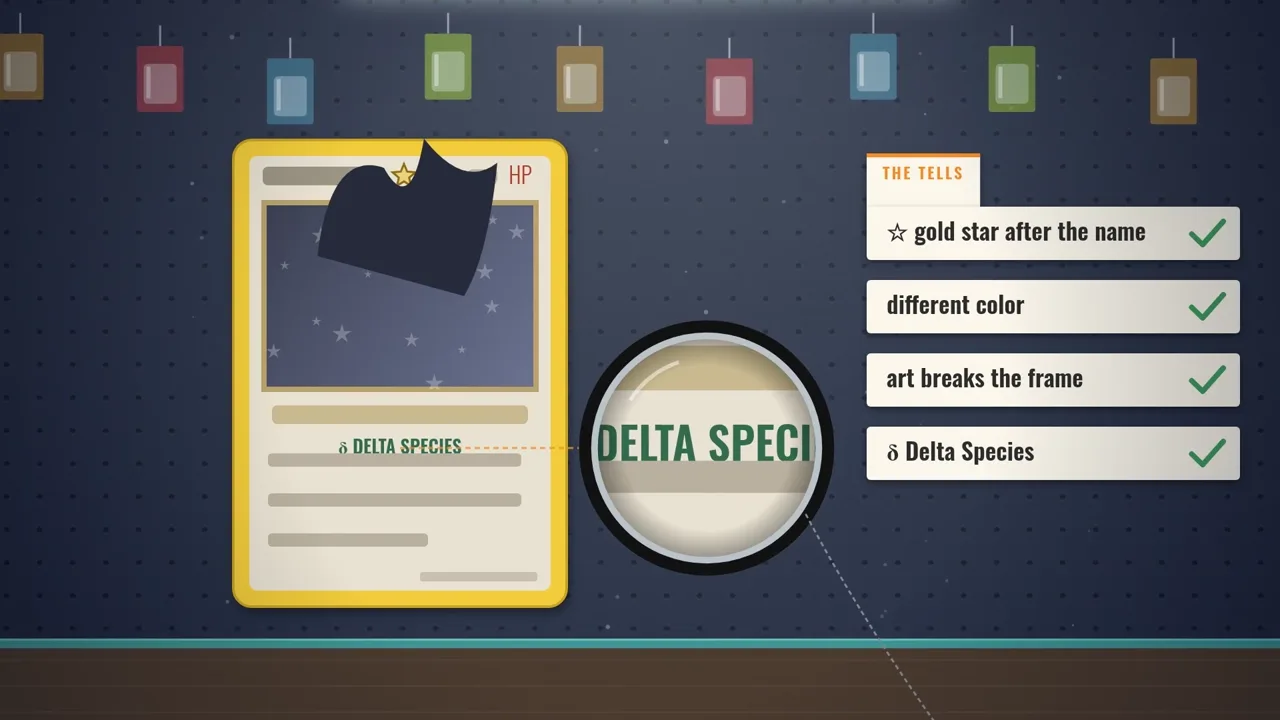
The Gold Star Charizard from Dragon Frontiers (2006) had a median of about $7,900 over 20 sales between Oct 4 and Nov 8, 2026, and it has a wild floor: every low-grade slab in those 20 sales went for $5,400 to $7,500. A PSA 1 sold Nov 3 for $6,000 with 37 bids. A PSA 8 sold for $15,800, and a PSA 9 sold in October for $42,877 (one sale).
Gold Star cards were rare pulls: CGC puts them at about one in 64 packs. The tells are a tiny gold star right after the name, the Pokemon in a different color than normal, and art that breaks out of the frame. This one also says Delta Species. If you see that gold star, don't put it back.
Which old Pokemon cards will you actually find in a binder?
Most binders won't have a Gold Star. The Charizard that shows up far more often is the plain, unlimited Base Set Charizard: no stamp, and a shadow on the picture box. Twenty sold in just two days, Nov 9 and 10, 2026. Ungraded copies mostly went for $200 to $525, and a PSA 1 sold for $295. A PSA 10 sold for $40,401 in October, but that's one sale at the top grade, not what a binder copy brings.
An ungraded 1st Edition Dark Charizard from Team Rocket sold Nov 1 for $532.88 with 45 bids. A binder lot of 225 old cards sold Nov 2 for $620 with 53 bids. That's one sale, and what's inside decides the price.
Watch for reprints. Pokemon reprinted the Base Set Charizard for its 25th anniversary and again in 2026 for the 30th. A real 1999 card says Wizards in the tiny copyright line at the bottom, and it has no anniversary logo.
How much is the Espeon Gold Star worth? (No. 4)
Out of 19 recent sales, the median was about $10,000, and most low-grade and ungraded copies went for about $9,000 to $13,000. A PSA 1 sold in September for $9,000 with 33 bids, a PSA 7 sold Nov 8, 2026 for $19,900, and a CGC 10 sold for $100,098 in October with 65 bids (one sale).
Espeon Gold Star is from POP Series 5 (2007). POP packs were tiny two-card packs that went out through Pokemon's own player program; players earned them at Pokemon League and tournament events. This Espeon is green instead of its normal lilac. Its twin, the set's other Gold Star, is number two.
How much is a 1st Edition Charizard worth? (No. 3)
Out of 19 recent sales, the median was about $11,000 (one PSA 9 whose cert couldn't be checked is left out). Low-grade copies, PSA 1 to 5, mostly went for $8,700 to $15,000. A PSA 3 sold at auction in October for $10,100 with 86 bids, and a PSA 7 sold Nov 8, 2026 for $26,000. Even a badly damaged ungraded copy sold Nov 9 for $4,300 with 48 bids. A CGC 8.5 sold Nov 9 for $50,000 (one sale).
Here's what the stamp does. Same Charizard, same grade, PSA 7: two unlimited copies sold Nov 9 and 10 for $720 and $859.99. The 1st Edition sold for $26,000 on Nov 8. That little stamp made it more than 30 times the price.
How do you avoid a fake graded slab?
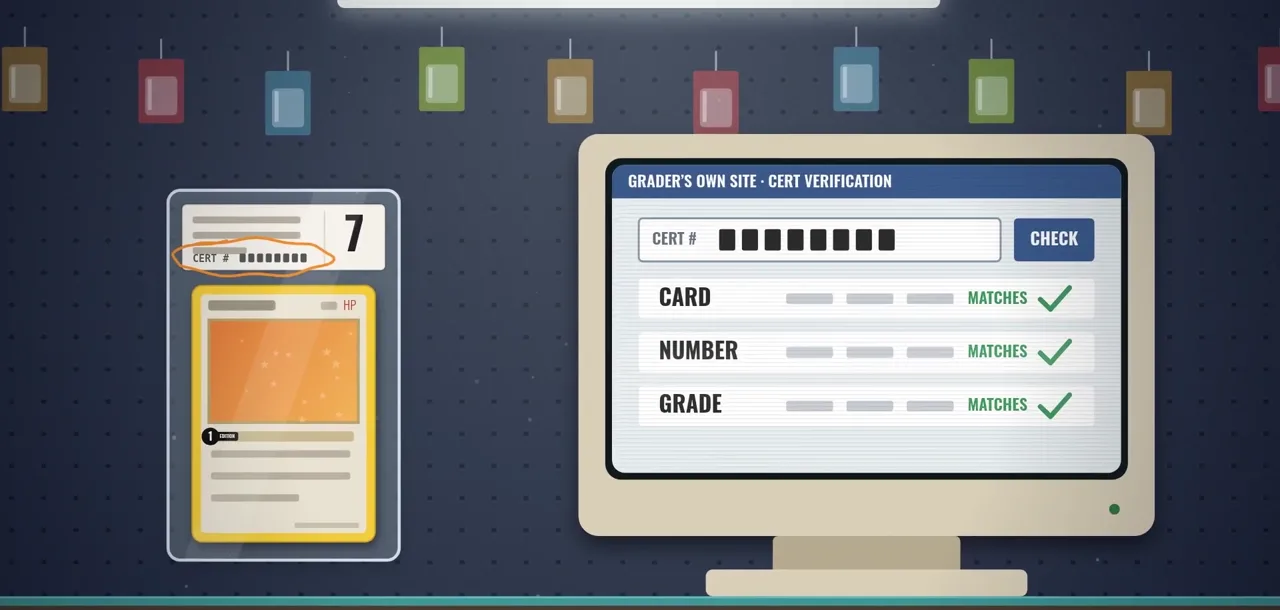
Five listings called PSA 10 sold for $1,000 to $17,000. That's less than the PSA 7 above, so they're likely fakes or mislabeled, and they're left out of the ranking. Before you pay for any slab, type its certification number into the grading company's own website and make sure the card, the number and the grade match the slab in your hand.
How much is the Umbreon Gold Star worth? (No. 2)
Out of 17 recent sales, the median was about $14,100, and it has the highest floor on the list: every low-grade and ungraded copy in those 17 sales went for $10,100 to $14,600. A raw copy sold in October for $10,100 with 21 bids, and a PSA 1 sold for $11,211. A BGS 9.5 sold Nov 8, 2026 for $48,288, and a PSA 9 sold for $76,100 in October (one sale).
It's a black Umbreon with blue rings instead of yellow, with the gold star after the name. The trap: in 2021, Pokemon reprinted this card in its Celebrations set with the same art and a small 25th anniversary logo in the bottom right of the picture. Those sell for a tiny slice of the original, so find the logo before you get excited.
What is the most valuable card on this list? (No. 1)
The Rayquaza Gold Star from EX Deoxys (2005), with a median of about $14,350 over 18 sales, just $250 ahead of Umbreon. It's the black Rayquaza, not the usual green one, a long sky dragon curled across a shiny background, with the gold star after the name.
Every low-grade copy in those 18 sales went for $9,000 to $18,800. A PSA 1 sold in October for $14,200 with 52 bids, and a PSA 3 sold for $15,400 on Nov 8, 2026. A raw copy listed as near mint sold Nov 1 for $34,400 with 68 bids (one sale), and a PSA 8 sold for $67,725 in September (one sale).
Watch for fakes: four Rayquaza Gold Star sales under $100 were stickers or fakes and are left out. If it's not in a slab, check the holo pattern against a graded copy and get it graded before you sell it as real. Once you've got a real one in hand, EasyFlip writes the eBay listing from a few photos: title, description, item specifics, category and a suggested price.
The bottom line
Before you close an old binder, check two spots on every card: the bottom left under the picture for the stamp, and the right edge of the picture box for the shadow. Then look for a gold star after the name, and check every slab's cert number before you pay.
For more lists built on real sold prices, see the top 10 used boots that sell on eBay and the 10 thrift finds that sell before Christmas. And if you want what's selling in your inbox twice a week, get the free newsletter.
Questions people ask
How can I tell if my Charizard is 1st Edition?
Look just under the bottom left corner of the picture for a small black stamp: a 1 with the word Edition. A 1st Edition Base Set card also has no dark shadow on the right side of the picture box. No stamp and no shadow means shadowless; a shadow means the later unlimited print.
How much is an old unlimited Base Set Charizard worth?
On eBay, 20 sold on Nov 9-10, 2026, and ungraded copies mostly went for $200 to $525. A PSA 1 sold for $295. A PSA 10 sold for $40,401 in October 2026, but that's one sale at the top grade, not what a binder copy brings.
Is a creased or damaged Pokemon card still worth selling?
Often, yes. A creased 1st Edition Lugia sold on eBay for $1,075 with 53 bids on Nov 9, 2026, and a badly damaged 1st Edition Charizard sold for $4,300 the same day. A crease cuts the price a lot, but rare cards still sell.
What is a Gold Star Pokemon card?
A rare card with a tiny gold star right after the Pokemon's name, the Pokemon in a different color than normal, and art that breaks out of the frame. CGC puts Gold Star pulls at about one in 64 packs. Three of the top four cards on this list are Gold Stars.
How do I spot a Pokemon card reprint?
A real 1999 Base Set card says Wizards in the tiny copyright line at the bottom and has no anniversary logo. The 2021 Celebrations reprints carry a 25th anniversary logo in the bottom right of the picture, and the 2026 Charizard reprint has a 30th anniversary logo.
How do I check if a graded Pokemon card slab is real?
Type the slab's certification number into the grading company's own website, such as PSA's cert verification or Beckett's card lookup, and make sure the card, the number and the grade all match the slab in your hand. Be wary of top-grade slabs priced below lower grades.
Sources
Prices are eBay sold listings, and every fact below was checked on November 11, 2026.
- eBay sold listings (Sold + Completed, US sellers), sales Aug 20-Nov 10, 2026, checked Nov 10, 2026
- Bulbapedia: Base Set (print runs, 1st Edition stamp, shadowless)
- Bulbapedia: Neo Genesis (English, Dec 2000)
- Bulbapedia: Skyridge (May 2003, the last Wizards of the Coast set)
- Bulbapedia: EX Deoxys (2005)
- Bulbapedia: EX Dragon Frontiers (2006)
- Bulbapedia: POP Series 5 (2007)
- CGC: Gold Star pull rate
- Pokemon: 30th Celebration
- PSA card grading standards
- CGC Cards grading scale
- PSA cert verification
- Beckett card lookup
- Antique Trader: Skyridge Charizards found in an attic
Read the full video transcript
A creased, beat-up first edition Lugia sold on eBay November ninth for one thousand seventy-five dollars, with fifty-three bids. A badly damaged first edition Charizard got four thousand three hundred. And the number one Pokemon card on this list isn't a Charizard at all. So I picked twelve famous vintage Pokemon cards, pulled their real eBay sold listings, and ranked the top ten. One card you can still find in old binders sells dozens of times a day. And five "perfect ten" slabs I threw out, because their prices were too low to be real. So today: all ten, how to spot each one in a binder, and the tiny mark that changes the price. Let's jump right into it.
So here's how this works. Every price is a real eBay sold listing in the US. I left out accepted best offers, because that crossed-out price is what the seller asked, not what the buyer paid. For each card I took up to twenty of the most recent sales, graded and ungraded together, and ranked by the median, the one right in the middle. And the grade is the whole game. The same card in a plastic slab with a nine on it can sell for ten times what an ungraded copy gets. So I'll give you the ungraded prices too, because that's what you'd actually find.
Number ten: Venusaur, from the original Base Set, first edition. The Pokemon card game came out in English in January nineteen ninety-nine, made by Wizards of the Coast. The very first print run got a small black stamp, a one with the word Edition, just under the bottom left corner of the picture. Out of twenty recent sales, the median was about thirteen hundred sixty. Ungraded and low-grade copies went for eight hundred to seventeen hundred. An ungraded one went to auction November second and sold for twelve hundred eighty, with twenty-seven bids. A PSA nine sold November eighth for thirteen thousand. And a PSA ten, the top grade, got thirty-seven thousand back in August. One sale. From three feet away, it's the shiny one with the big flower on its back. Up close, check two things. The first edition stamp, right at the left edge under the picture. And the right side of the picture box: first edition cards have no dark shadow there. Remember that stamp, because when we get to Charizard, you'll see what it does to the price.
Quick thing before we keep going. If you've got a pile of stuff waiting to be listed, that's exactly why I built EasyFlip. Snap a few photos and it writes the whole eBay listing for you: title, description, item specifics, the category, even a price. You check it, tap publish, done. Link's down below.
Number nine: Charizard, Base Set, shadowless. After the first edition run, Wizards kept printing without the stamp, and the early copies still had no shadow beside the picture. Collectors call those shadowless. No stamp, no shadow. Twenty sold between October twelfth and November tenth, and the median was about thirteen seventy-five. Ungraded and low-grade copies mostly went for eight hundred twenty to seventeen fifty. A raw one sold November tenth for nine hundred seventy, with eighteen bids. Another sold the same day for seventeen thirty-six. And a PSA eight got fifty-two hundred, with eighty-nine bids. So look at the right edge of the picture box. A dark drop shadow there means it's the later, unlimited printing. No shadow and no stamp means shadowless. And on the shadowless printing, the HP number in the top corner is printed in a thinner font.
Number eight: Blastoise, Base Set first edition, the big blue turtle with the water cannons on its shell. Same set, same stamp, same missing shadow as Venusaur. Out of eighteen recent sales, the median was about fifteen hundred. Most ungraded and low-grade copies went for nine hundred to two thousand. A PSA one, the lowest number PSA gives, still got twelve hundred nine, with thirty-nine bids. A CGC nine and a half sold November first for ninety-three hundred. And a TAG ten got sixty-five thousand one hundred in September, with eighty-five bids. One sale. That jump from fifteen hundred to sixty-five thousand is the grade. Corners, edges, surface, and centering, how even the yellow border is on all four sides. So before you get excited, tilt it under a light and look for scratches across the holo.
Number seven: Lugia, from Neo Genesis, first edition. Neo Genesis came out in English in December two thousand. Lugia is the big white and silver bird, on a sparkly holo background. Out of twenty recent sales, the median was about twenty-nine fifty. Ungraded copies mostly went for seven fifty to twenty-five fifty. That creased one from the start: one thousand seventy-five, fifty-three bids. A raw copy that looks clean in the seller's photo went to auction November eighth and sold for sixty-two hundred, with seventy-three bids. One sale. And a CGC ten pristine sold for a hundred twenty-eight thousand in August. One sale. The tell is the same first edition stamp, at the left end of the strip just under the picture. And a crease costs you a lot, but it doesn't make the card worthless. That creased copy still cleared a thousand.
Number six: Crystal Charizard, from Skyridge. Skyridge came out in May two thousand three, and it was the last set Wizards of the Coast ever made for Pokemon. The card number is one forty-six out of one forty-four, a number higher than the set. That's a secret rare. Out of twenty recent sales, both versions together, the median was about five thousand fifty. And here's the trap: there are two versions. The holo, where the picture shines, and the reverse foil, where everything except the picture shines. Low-grade and ungraded holos mostly went for forty-one fifty to nine thousand. Reverse foils mostly went for sixteen hundred to fifty-five hundred. A PSA one holo sold November eighth for fifty-one hundred, with twenty-seven bids. A PSA one reverse foil sold the next day for eighteen fifty. A raw holo sold November eighth for nine thousand. And a CGC ten pristine got a hundred twenty-five thousand in August. One sale. So check where the shine is. And these do turn up in real life. A man in England found three Skyridge Charizards while clearing out his parents' attic, and the auction this year helped pay for his wedding.
Number five: Charizard Gold Star, from Dragon Frontiers, two thousand six. Gold Star cards were rare pulls: CGC puts them at about one in sixty-four packs. The tell is a tiny gold star right after the name, the Pokemon is in a different color than normal, and the art breaks out of the frame. This one also says Delta Species. Twenty sold between October fourth and November eighth, and the median was about seventy-nine hundred. The floor is wild. Every low-grade slab in those twenty sales went for fifty-four hundred to seventy-five hundred. A PSA one sold November third for six thousand, with thirty-seven bids. A PSA eight got fifteen thousand eight hundred. And a PSA nine sold in October for forty-two thousand eight hundred seventy-seven. One sale. That floor is the point. A PSA one is the lowest number PSA gives, and it still sold for six thousand. So if you see that gold star, don't put it back.
Now, real talk. Most binders won't have a gold star in them. The Charizard that shows up far more often is the plain Base Set Charizard. No stamp, shadow on the picture box. The unlimited printing. Twenty sold in just two days, November ninth and tenth. Ungraded copies mostly went for two hundred to five twenty-five. A PSA one got two ninety-five. And a PSA ten, the top grade, sold in October for forty thousand four hundred one. One sale. And it's not the only one. A first edition Dark Charizard from Team Rocket, ungraded, sold November first for five thirty-two eighty-eight, with forty-five bids. And whole binders sell too. A binder lot of two hundred twenty-five old cards sold November second for six hundred twenty, with fifty-three bids. One sale, and what's inside decides the price. But watch for reprints. Pokemon reprinted the Base Set Charizard for its twenty-fifth anniversary, and again this year for the thirtieth. The tell: a real nineteen ninety-nine card says Wizards in the tiny copyright line at the bottom, and it has no anniversary logo.
Number four: Espeon Gold Star, from POP Series five, two thousand seven. POP packs were tiny two-card packs that went out through Pokemon's own player program. Players earned them by playing in Pokemon League and tournament events. Out of nineteen recent sales, the median was about ten thousand. Most low-grade and ungraded copies went for about nine thousand to thirteen thousand. A PSA one sold in September for nine thousand, with thirty-three bids. A PSA seven sold November eighth for nineteen thousand nine hundred. And a CGC ten got a hundred thousand ninety-eight dollars in October, with sixty-five bids. One sale. This Espeon is green instead of its normal lilac, with the gold star after the name. And it has a twin. The other gold star in that same POP set is number two on this list.
Number three: the one everybody knows. Charizard, Base Set, first edition. Same stamp as Venusaur, same missing shadow, but this is the card everybody hopes to find. Out of nineteen recent sales, the median was about eleven thousand. I left out one PSA nine whose cert I couldn't check. Low-grade copies, PSA one to five, mostly went for eighty-seven hundred to fifteen thousand. A PSA three went to auction in October for ten thousand one hundred, with eighty-six bids. A PSA seven got twenty-six thousand. That damaged copy from the start: four thousand three hundred, forty-eight bids. And a CGC eight and a half sold November ninth for fifty thousand. One sale. Remember the stamp? Same Charizard, same grade, PSA seven. Two unlimited copies sold November ninth and tenth for seven twenty and eight sixty. The first edition got twenty-six thousand on November eighth. That little stamp made it more than thirty times the price. And here's the trap. Five listings called PSA ten sold for one thousand to seventeen thousand. That's less than the PSA seven above, so they're likely fakes or mislabeled, and I left all five out. Before you pay for any slab, type its certification number into the grading company's own website, and make sure the card, the number and the grade match the slab in your hand.
Number two: Umbreon Gold Star, POP Series five, Espeon's twin. A black Umbreon with blue rings instead of yellow, and that gold star after the name. Out of seventeen recent sales, the median was about fourteen thousand one hundred. And this one has the highest floor on the list: every low-grade and ungraded copy in those seventeen sales went for ten thousand one hundred to fourteen thousand six hundred. A raw copy sold in October for ten thousand one hundred, with twenty-one bids. A PSA one got eleven thousand two eleven. A BGS nine and a half sold November eighth for forty-eight thousand two eighty-eight. And a PSA nine got seventy-six thousand one hundred in October. One sale. Now the trap. In twenty twenty-one, Pokemon reprinted this card in its Celebrations set, with the same art and a small twenty-fifth anniversary logo in the bottom right of the picture. Those sell for a tiny slice of the original. So find the logo before you get excited.
Number one, and it's not a Charizard: Rayquaza Gold Star, from EX Deoxys, two thousand five. It's the black Rayquaza, not the usual green one, a long sky dragon curled across a shiny background, with the gold star after the name. Out of eighteen recent sales, the median was about fourteen thousand three fifty. That's just two hundred fifty dollars ahead of Umbreon. Every low-grade copy in those eighteen sales went for nine thousand to eighteen thousand eight hundred. A PSA one sold in October for fourteen thousand two hundred, with fifty-two bids. A PSA three got fifteen thousand four hundred on November eighth. A raw copy listed as near mint sold November first for thirty-four thousand four hundred, with sixty-eight bids. One sale. And a PSA eight got sixty-seven thousand seven twenty-five in September. One sale. And watch for fakes. Four Rayquaza Gold Star sales under a hundred dollars were stickers or fakes, so I left them out. If it's not in a slab, check the holo pattern against a graded copy and get it graded before you sell it as real.
So that's the top ten: Venusaur, shadowless Charizard, Blastoise, Lugia, Crystal Charizard, Gold Star Charizard, Espeon, first edition Charizard, Umbreon, and Rayquaza, with every range right here. And the one habit: before you close an old binder, look at the left corner under each picture for the stamp, and the right side for the shadow. So, what's the best card you've ever pulled out of somebody's old binder? Tell me in the comments. And if this makes you flip through one more binder this weekend, a like helps it reach more resellers. Have a blessed day.