The short answer
What is the worst habit for eBay resellers?
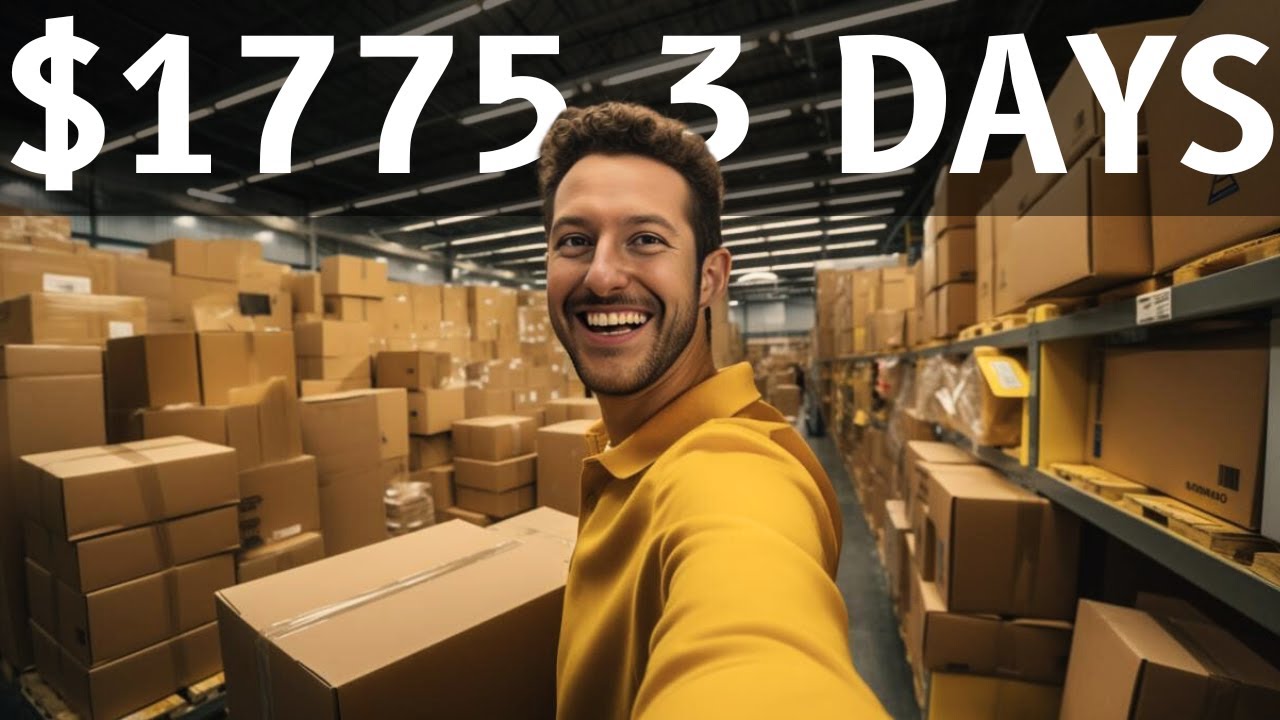
When I made this video on Mar 28, 2025, the worst habit was buying cheap inventory just because it felt like a deal. My first year did over $25,000 in sales but barely broke even. Goodwill bins were $1.59/lb, DVDs were 25 cents each, and many items took years to sell. Buy demand, not just low cost.
- My first full-time year was over $25,000 in sales, but we were barely breaking even because too much inventory was slow-moving.
- Cheap inventory is not automatically good inventory: 500 DVDs at 25 cents each can still take years to sell.
- When I made the video, new-with-tags Lululemon men’s ABC Commission shorts were an example of paying up because they could sell within 3 months on eBay.
- A 10,000-item store making 30 sales a day is not always better than a tighter 1,000-item store selling 25 items a day.
- The rule is simple: check demand and sell-through before buying, even when the item only costs $1.
Chapters (7)
I made this video on Mar 28, 2025 because this one habit held my store back more than almost anything else: buying inventory because it was cheap, not because it was in demand. If you are sourcing this week and trying to grow an eBay store, this is the mindset shift that can save you from shelves full of “good deals” that sit for years.
What is the worst reselling habit?
The worst habit is paying too little for inventory and thinking the low buy cost automatically makes it a good deal. That sounds backwards, because every reseller wants cheap cost of goods, but cheap inventory can still be bad inventory.
When I first started reselling full time, I went hard at the Goodwill bins. At the time I talked about in the video, the bins were $1.59 a pound, and that felt like the safest place in the world to source. How could I go wrong if my average item cost was only a dollar or two?
The problem was not the bins. The problem was my buying. I was grabbing way too much because it was cheap, then spending time photographing it, listing it, storing it, and waiting. A lot of those “deals” were not items people were actively searching for.
Here is the difference I wish I understood earlier:
| Inventory habit | Why it feels smart | What can actually happen |
|---|---|---|
| Buying anything at $1 to $2 | Low risk per item | It can take years to sell |
| Buying 500 DVDs at 25 cents each | Huge quantity for little money | Storage and listing time pile up |
| Buying bulk lots because they look too good to be true | Fast way to get inventory | Damaged, missing-tag, or average items can kill the margin |
| Paying up for proven demand | Feels risky upfront | Money can turn faster if sell-through is strong |
That is why I do not want beginners to hear “list, list, list” and then pressure themselves into buying piles of weak inventory just to hit a listing goal. Listing bad products faster does not fix the real problem.
Why cheap inventory can keep an eBay store stuck
Cheap inventory keeps a store stuck when it creates work without creating fast enough sales. In my first year, we did over $25,000 in sales, and that might sound great when you are just starting, but we were barely breaking even.
We were laying the foundation, learning the business, and testing categories. We bought books, video games, DVDs, VHS, and all kinds of random items because the buy cost was low. The issue was that some of those items took years to sell.
There is a business model for long-tail inventory. Some sellers are fine waiting three to five years for the right buyer. If that is your model and your storage is cheap, you can make it work.
But that was not what I wanted. I wanted faster money. I wanted inventory that could move, sell, and turn back into more buying power.
That is the part people miss when they only look at cost of goods. The item does not just cost you the dollar you paid. It also costs you:
| Hidden cost | What it looks like in a resale business |
|---|---|
| Listing time | Researching, photographing, measuring, and writing the listing |
| Storage space | Bins, shelves, boxes, labels, and room in your house or warehouse |
| Mental clutter | Managing thousands of items that do not move quickly |
| Cash drag | Money tied up in stale inventory instead of faster sellers |
| Opportunity cost | Time spent listing weak items instead of sourcing stronger ones |
When I look back, the mistake was not starting small. The mistake was believing low cost was the same thing as low risk.
Should resellers pay up for inventory?
Yes, paying up can be the better move when the item has strong demand and a good sell-through rate. In the video, I used new-with-tags Lululemon as the example because we had recently started buying more of it even though it was expensive.
The specific example I showed was new-with-tags Lululemon men’s ABC Commission shorts. Those are not the kind of item you usually get for a dollar. They cost more upfront, but when I made the video, I knew that if I listed them on eBay brand new with tags, they should sell within three months, which is fast for eBay. If I put them on Whatnot, I expected them to sell guaranteed.
That is the trade I am willing to make now. I would rather pay more for something with real buyers behind it than brag about a low buy cost on something nobody wants.
| Example from the video | Cost mindset | Demand mindset |
|---|---|---|
| Goodwill bins clothing | “It is only $1 to $2.” | “Is someone actually searching for this?” |
| New-with-tags Lululemon | “This is expensive.” | “Can I turn this within about 3 months?” |
| Retail arbitrage shoes | “Spending $50 to $70 feels risky.” | “Can I make $10, $20, or $30 profit quickly?” |
| Bulk new-with-tags pallets | “It is $1.50 per item.” | “How much is damaged, average, or slow?” |
This is where the mindset has to change. A lot of us start in scarcity mode. We want the cheapest possible buy cost because we are scared to spend money. I get it. I was there.
But after doing this for years, I would rather buy inventory with a strong following. In the video, I mentioned brands like Lululemon, Patagonia, and Carhartt because those are examples of brands that can have a cult-like customer base. The brand alone is not enough, but it gives you a better starting point than random no-demand pieces.
How do you know if an item is worth listing?
An item is worth listing when demand justifies the time it takes to process it. The question I want you to ask is simple: is this item even worth my time?
When you are new, you usually have more time than money. That can make cheap inventory feel perfect. But you do not want to waste that time listing terrible products. You want to use that time learning what sells, improving your titles, checking comps, and building a store that can turn inventory.
In the video, I said I have reviewed eBay stores where the systems look good. The listings are decent. The titles are fine. The seller is doing the work. But the actual items are weak. That is a hard problem because better photos and cleaner titles can only do so much if the item itself has poor demand.
Before I buy now, I want to know:
| Question to ask | Why it matters |
|---|---|
| Is there demand for this item? | A cheap item with no buyers is still a bad buy. |
| What is the sell-through rate like? | Faster sell-through means faster cash recovery. |
| Is the condition strong enough? | Holes, stains, missing tags, and damage can wipe out the deal. |
| Is the brand actually good for resale? | Some retail brands are fine in stores but weak for reselling. |
| Will I be happy storing this for months? | If not, I need a better reason to buy it. |
This is also where listing tools can help once you have already made the buying decision. Once I know an item is worth listing, EasyFlip can write the listing from a few photos so the busywork does not slow me down. But the tool cannot turn a bad buy into a great one. The buy still matters first.
Why bulk buys can be dangerous for beginner resellers
Bulk buys are dangerous when the low per-item cost hides bad condition, weak brands, or slow demand. I talked about pallets of new-with-tags inventory that look amazing at first because the per-piece cost might be around $1.50.
Then the inventory arrives.
Maybe 25% of it is damaged, missing tags, has holes, cuts, tears, or stains. Then another big chunk is average inventory. In the video, I mentioned brands like Time and Tru, Calvin Klein, and Banana Republic as examples of items that can be good in retail stores but not necessarily good for resale.
That does not mean every piece from those brands is worthless. It means you cannot assume retail familiarity equals resale demand.
| Bulk-buy problem | Why it hurts |
|---|---|
| 25% damaged or missing tags | You paid for items you may not be able to sell well. |
| Average mall or big-box brands | They may have too much supply and not enough resale demand. |
| Huge quantity | You now need space, systems, and time to process it. |
| Low per-item cost | It can trick you into ignoring sell-through. |
Bulk inventory can work if you know exactly what you are buying and you have the systems for it. But for a beginner, it can also bury you.
The same thing can happen with media. In the video, I used the example of buying 500 DVDs for 25 cents each. That sounds like a steal until you realize you have to list them, store them, and wait. If they take years to sell, that cheap buy becomes a long-term storage project.
Is a bigger eBay store always better?
No, a bigger eBay store is not always better if the inventory is slow. I gave the example from my own experience: I do not want to see you with 10,000 items in your eBay store making 30 sales a day if the store could be more optimized.
Thirty sales a day is great. I am not saying it is bad. But if you have 10,000 active listings to get there, you have to ask whether your inventory is working hard enough.
In the video, I compared that to sellers with around 1,000 items who list about 15 items a day and sell 25 items a day. That kind of store is much tighter. It is not just about how many listings you have. It is about how well those listings convert.
| Store example from the video | Daily sales mentioned | Lesson |
|---|---|---|
| 10,000-item store | 30 sales a day | Big can still be inefficient. |
| 1,000-item store | 25 sales a day | Smaller can work if inventory is stronger. |
| Listing 15 items a day | 25 sales a day | Quality plus consistency can outperform volume alone. |
This is why “list more” is incomplete advice. You should list consistently, but the quality of what you list matters. If your sourcing is weak, listing more can just make the problem bigger.
Where should resellers source if thrift stores are too competitive?
Resellers should still use thrift stores, bins, and flea markets, but they should not rely on only one sourcing method. In the video, I said those places are amazing and everyone should use them, but thrift store prices were going up and competition was getting stronger.
That means you have to think outside the box.
Some of the sourcing ideas I mentioned were reaching out to junk removal service companies, real estate agents, and estate sale companies. I also talked about building a sourcing team and using a brand list. Over the previous year, we had developed a sourcing team where items came in and were delivered to us based on a list of about 250 brands we felt confident selling.
I also mentioned opening a consignment program. That can work because some people have extra inventory they bought and do not want to list, or life happens and they need to move inventory. Local churches that handle clothing could also be a potential connection if you can help them sell items on eBay or Whatnot.
| Sourcing channel | Why it can help |
|---|---|
| Goodwill bins | Low cost, but you still need discipline. |
| Thrift stores | Reliable, but prices and competition can rise. |
| Flea markets | Good for variety and local opportunities. |
| Junk removal companies | They may see items before they hit the thrift market. |
| Real estate agents | They may know families clearing houses. |
| Estate sale companies | They can create repeat sourcing relationships. |
| Consignment | You can get access to inventory without buying every piece upfront. |
| Local churches | They may have clothing flow and need help moving it. |
The bigger lesson is not that one sourcing method is magic. The lesson is that copying everyone else makes it harder to build a long-lasting business. You need your own lanes.
What changed my reselling business?
The biggest change was moving from a scarcity mindset to a demand mindset. In our first year, we did over $25,000 in sales and barely broke even. By our fourth full-time year, when I made this video, we were projected over $1 million in sales.
That did not happen because we kept buying the cheapest stuff possible. It happened because we got better at understanding what was worth our time.
We started asking better questions. Does this have demand? Can it sell quickly? Is the condition good? Is there a customer base? Am I buying this because it is profitable or just because it is cheap?
That is also why Whatnot became a bigger part of our model. In the video, I said we turned a lot of our business toward Whatnot because of the faster money we were able to achieve. eBay is still powerful, but the main point is cash turn. The faster you can responsibly turn inventory, the more chances you have to buy better inventory.
If you want more practical reseller notes like this when I publish them, you can join the newsletter at /newsletter.
The bottom line
Do not be scared to pay up for inventory if it has real demand and a good sell-through rate. Be scared of buying piles of cheap items that look like deals but sit for years.
This week, before you source, decide what “worth listing” means for your store. Check demand, check condition, and be honest about your time. A $1 item can be a great buy, but only if buyers actually want it.
Questions people ask
Is buying cheap inventory bad for eBay reselling?
Buying cheap inventory is not automatically bad, but it is bad when the item has weak demand. When I made this video on Mar 28, 2025, I used my early bins buying as the example: $1 to $2 items felt safe, but many took years to sell.
Should I pay up for items to resell?
Yes, if the item has strong demand, good condition, and a sell-through rate that makes sense. In the video, I used new-with-tags Lululemon men’s ABC Commission shorts as an example of inventory I was willing to pay more for because I expected it to sell within about 3 months on eBay.
What sell-through mindset should beginner resellers use?
Beginners should ask whether an item is worth the time to photograph, list, store, and ship. A low buy cost does not matter if the item takes years to sell and keeps cash tied up.
Are bulk buys good for resellers?
Bulk buys can work, but they are risky when you do not know the condition or demand. In the video, I warned that a pallet that looks cheap at $1.50 per item can arrive with damaged pieces, missing tags, stains, and too much average inventory.
Is a 10,000-item eBay store better than a 1,000-item store?
Not always. In the video, I compared a 10,000-item store making 30 sales a day with tighter stores around 1,000 items selling 25 items a day, because quality and conversion can matter more than raw listing count.
Where can resellers source besides thrift stores?
In the video, I suggested thinking beyond thrift stores, bins, and flea markets. Other options included junk removal companies, real estate agents, estate sale companies, consignment, local churches, and building a sourcing team around a brand list.
Sources
Prices are eBay sold listings, and every fact below was checked on March 28, 2025.
Read the full video transcript
I've been reselling for over 4 years now full time and in our first year we did over $25,000 in sales and I'm here to talk to you today about how we went from 25,000 a year in sales to now projected over a million dollars in sales in our fourth full-time year. I used to have a really bad habit and this habit is what kills most reselling businesses. It is paying too little for items thinking that you're getting a good deal and these items never sell. Let me explain further. So when I first started reselling on me eBay this huge habit just killed me and this is what kills most resellers is spending too little on product thinking it's going to be something that you get a great deal on and you're going to make tens of thousands of dollars and yet that is not the truth. So the things that I used to do when
I first started was go to the Goodwill bins on a regular basis and this is a great thing to do. It's a dollar 59 a pound. You're getting a good deal but I used to buy just about everything and this is where a beginner resellers really start to struggle. See I would buy inventory, inventory, inventory, tons of inventory when I first started and I was excited. I was fired up. But little did I know even though I was getting that inventory for a dollar, two dollars a piece come to find out these items would take years to sell. And in this video I'm going to kind of describe on why it's important to not focus on getting a good deal but actually the reverse paying up for product that is actually in demand. So lately we've been buying a lot of new with tags Lululemon and it's incredibly expensive but you know what? It sells
so fast. So in this tub is brand new with tags Lululemon and we just started recently paying up for these items because they sell so fast, they have such a huge demand behind them. And I'm going to say that that was the difference between, you know, our kind of slower sales in the beginning of doing eBay and reselling in general, is that we were thinking we're getting such a good deal, how could we go wrong? And this is the death of most resellers. We're always looking for a deal, but that doesn't mean those items that we're getting a deal on are actually in demand. And that is what really kills eBay stores. Doing many eBay store reviews, um looking at people's systems and their listings and their titles and everything looks good, but the item that they spent time taking photos of, sourcing, looking up research, end up being actually really bad items. And that
goes into a bunch of other things that go into it, like sell-through rate, but also it's like just because you got a good deal on it, doesn't mean it's worth listing. And in my experience over the last 4 years, paying up for items that are actually going to sell has been way more advantageous for our business. So, here we got brand new with tags, Lululemon men's ABC Commission shorts. These are expensive, but at the same time, I know that these are going to sell. If I list these on eBay brand new with tags, they're going to sell within 3 months, which is fast for eBay. And if I put these on Whatnot, they're going to sell guaranteed. So, this is the crazy part of the things that I've learned over the last few years is that I know it's kind of backwards. You want to look for the deal. You want to get a good
deal on it, but that doesn't mean it's worth buying. You need to think in your self in your mind that is this item even worth my time? When you're just getting started reselling full-time, you have a lot of time. And you don't want to waste that time by listing terrible products. So, here we're picking up items that are in demand and selling them to people that are going to pay top dollar. Are you a reseller that loves to go sourcing and loves to shop? Well, right now we are hiring in our wholesale team of over 31 members. We provide you with a brand list of over 300 brands and we are buying all the brands on that list. It's a great opportunity to double your money and right now we're helping people pay off their kids student loans. You could check out right here. This lady's been on the team and we've been able to
help her make some extra money. So if this sounds something interesting to you and you love to go shopping and you love to source, book a call, click a link down below and we'd love to see if we can be a good fit. And you might be wondering why this is even important. Well, because in my experience in our first year doing $25,000 in sales might seem like a lot when you're just getting started, but it's not. We were barely breaking even. We're just laying the foundation for our business. We were buying books, video games, DVDs, VHS, thinking that we were going to get it Oh my goodness, 500 DVDs for 25 cents each and man, they took years to sell through the listing process, through the photography process, storing it in inventory. There is a business model to be had for items that take years to sell, but I don't think the people that
are watching this channel want to wait several years, three, five years for items to sell. We're trying to make quick sales. We're trying to turn over the money very quickly and that's why we turned our business model a lot towards Whatnot because of the faster money that we're able to achieve. So this is the death of most eBay resellers and resellers in general is once you start getting into bulk buys and buying things that are, you know, too almost too good to be true true. Wow, pallets of inventory, brand new with tags for $1.50 and then it comes delivered and 25% of the items are damaged, missing tags, holes, cuts, tears, and stains. The other 50% are average items, time-and-true, Calvin Klein, Banana Republic, items that are good in retail stores, but they're not good for reselling. And this is why I wanted to make this video to help protect a lot of beginners out
there to don't mind paying up for items that actually have demand behind them, rather than look for the good deal all the time. So, a good example is like people who do retail arbitrage. They go out and pay up for shoes, and they're happy with making 10, 20, 30 dollars profit, but they're spending 50, 60, 70 dollars for the shoes. So, I think that that is like a mindset shift that needs to happen here, where, you know, go from that um scarcity mindset to an abundance mindset. And really, there's like a common theme behind reselling for eBay resellers is like list, list, list, list. And I think that really builds the pressure on people to acquire tons of inventory to meet a listing goal, which can be a really big problem. I don't want to see you in your eBay store like I was with 10,000 items in our eBay store making 30 sales a
day, which is great. It's just not the best and optimized it could be. There's people's eBay stores out there that are listing 15 items a day with a thousand item store, and they're selling 25 items a day. So, I really want to help you kind of shift that mindset behind like scarcity, paying one dollar um per piece, which can be good. It can be good if you find the right supplier and right inventory, but I want you to put another thought in your mind that paying up for inventory is not a bad thing, especially if you know it has a good like cult-like following, like Lululemon, Patagonia, Carhartt, but also things that are actually going to have a good sell-through rate. And you may just need to think in new ways about your sourcing. It's a great way to go to the Goodwill bins and the thrift store and the flea market to get inventory,
which is amazing. I mean, everyone should do that. But, if that's your only way to get inventory, it's going to be really hard to build a long-lasting sustainable business. Why? Because thrift store prices are going up. It's getting much more competitive. So, you need to think in new ways how to acquire inventory. Whether you reach out to junk removal service companies, you reach out to real estate agents, estate sale companies, start thinking outside the box and how you can acquire inventory. Over the last year, we've developed a sourcing team, so we get items that come in and get delivered to us based on a brand list of about 250 brands that we feel confident selling. We've also opened up over the last few months a consignment program where all this comes in through consignment where people just have extra inventory that they bought and maybe didn't want to list or something came up in their
life and they need to move inventory. That could be a great option for you to help get inventory in your business. Maybe there's some local churches in your area that do clothing. Well, maybe you can start a consignment where they could sell them on eBay for them or on whatnot. It's time to start thinking outside the box and that outside the box thinking is going to save your business and it's going to help you grow. Don't follow what everyone else does. It's time to start thinking different. And I wanted to make this video going over the things that we've learned over the last 4 years because my mindset was stuck in the scarcity mindset in our first year, we barely broke even. We were starting to figure it out, but we knew that we needed to think that just because something is $1 doesn't make it worth buying. So, I hope you can do the
same. I hope you can apply some of that mindset into your business going into 2025. And don't be scared to pay up for inventory, especially if it has a good sell-through rate.