The short answer
What reseller business advice helps beginners grow faster?
When I made this video on Jan 14, 2025, my best reseller advice was simple: judge inventory by sell-through rate and average sale price, source beyond thrift stores, and pick one lane long enough to get good. For my eBay model, I liked 30%+ sell-through and about $10 profit per sale.
- In my eBay clothing model, I preferred a 30%+ sell-through rate so inventory had a realistic chance to sell within about 9-12 months.
- I built my early buying rules around average sale price and roughly $10 profit per sale, not just whether an item was cheap.
- By Jan 2025, my business was running 3 Whatnot shows per day and ordering thousands of pieces of inventory per week.
- One Facebook community post led to a bulk deal with deadstock JNCO jeans, Arc'teryx, Gucci bags, and other new-with-tag items.
- There is not one correct resale model: low-margin/high-volume, high-margin/low-volume, niche, and broad category sellers can all work.
Chapters (9)
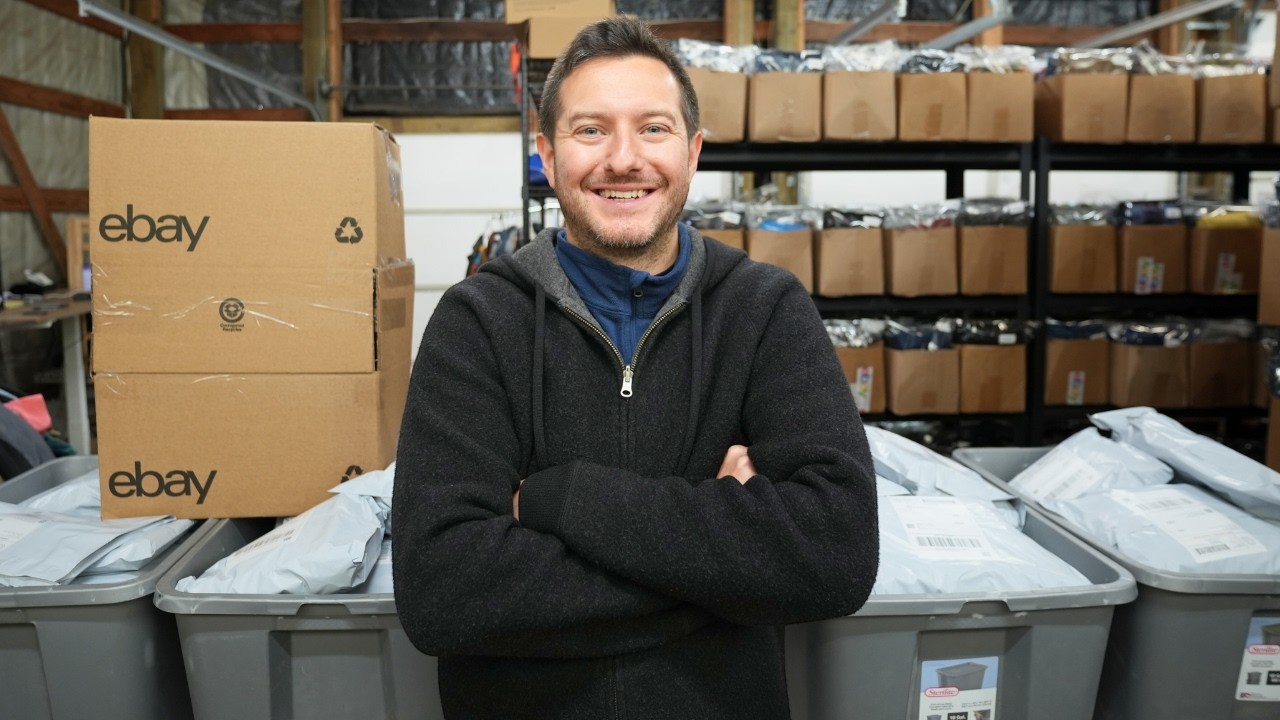
This is the reseller business advice I wish somebody had sat me down and explained when I was brand new. When I made this video on Jan 14, 2025, we were clearing warehouse space for five pallets of brand-new boots and shoes, running multiple Whatnot shows a day, and still learning how to keep the whole machine moving.
The point is not that you need a warehouse, pallets, or live selling. The point is that the same three concepts apply whether you are listing ten items a week from thrift stores or trying to build a full-time resale business.
What should new resellers focus on first?
New resellers should focus first on the effort that actually creates results: learning sell-through rate, average sale price, photos, titles, item specifics, and consistent listing habits. When I started, I thought I could buy random items, list them on eBay, and the money would roll in like passive income. That is not how this works.
Reselling is not passive. Especially in the beginning, it is sourcing, cleaning, photographing, measuring, researching, listing, answering customers, shipping, handling returns, and then doing it again the next day.
The first time you do any of that, you are probably going to be bad at it. That is normal. My first year was a lot of trial and error. I had to learn what a good title looked like, what photos actually helped an item sell, which item specifics mattered, and how to check demand before I bought inventory.
The two biggest numbers I wish I understood sooner were sell-through rate and average sale price.
| Metric | What I used it for | My rule when I made this video | Why it mattered |
|---|---|---|---|
| Sell-through rate | Estimating how long an item may take to sell | 30%+ for my eBay clothing model | It helped me avoid filling my space with stale inventory |
| Average sale price | Estimating revenue before buying | High enough to support my time | Cheap items are not always profitable items |
| Profit per sale | Deciding if the work was worth it | Around $10 profit per sale | It helped me judge my hourly return |
| Workweek reality | Planning the business honestly | About 30-45 hours in my example | The model had to match the time I was putting in |
For my eBay clothing business, I liked a 30% sell-through rate and above. That gave me a realistic chance, with seasonality, of selling an item within about nine months to a year. I also wanted around $10 profit per sale because that made sense for my time, space, and workload.
That does not mean your number has to be my number. If you sell electronics, hard goods, shoes, books, or collectibles, your model may be different. The lesson is that you need a buying rule. If you just buy anything that looks cheap, that is a great way to run out of money and space.
Why does reselling feel so hard at the beginning?
Reselling feels hard at the beginning because you have not built the mental database yet. After you have sold hundreds or thousands of items, you start recognizing brands, categories, prices, and patterns that a beginner cannot see yet.
That only comes from reps.
It is just like learning to cook or learning to walk. The first version is messy. The more you do it, the more natural it gets. Two years into my journey, I could recognize items I had sold before and keep buying the same types of winners over and over.
That is when things started to feel less random. I knew what certain clothing brands usually sold for. I knew which items were worth photographing and which items would probably sit. I knew when a piece had enough demand to justify the work.
If you are brand new, do not beat yourself up because you do not know everything yet. But also do not use that as an excuse to stay random. Study sold comps. Pay attention to how long items take to sell. Track what you paid, what it sold for, and how much you actually kept after fees and shipping.
Once you have a few photos ready, EasyFlip can help write the listing from those photos, but you still need to make the buying decision. The best listing tool in the world cannot save bad inventory.
How do you find inventory when thrift stores are too competitive?
You find inventory when thrift stores are too competitive by looking for sourcing channels other resellers are ignoring. Thrift stores and yard sales are great places to start, but they are not the only way to build a resale business.
When I first started, I thought inventory came from thrift stores, yard sales, estate sales, and maybe storage units. That was about it. Then I started asking better questions.
What do estate sale companies do with the items that do not sell? What do thrift stores do when donations pile up in the back? What happens to clothing that sits too long on the rack? Who has storage units full of product and needs it gone?
Those questions changed the business.
At one point, I posted in local Facebook communities and ran an ad saying we buy in bulk. I included the kind of brands and products we were looking for. About two and a half years into our resale journey, a storage unit manager contacted me and said they had units full of new-with-tag items. If we did not pick them up, the items were going to the dump.
Inside was basically a time capsule from around 1995 to 2005: deadstock JNCO jeans, deadstock Arc'teryx, Gucci purses, Gucci messenger bags, and other new-with-tag inventory. That deal did not happen because I got lucky walking into a thrift store. It happened because I made it known what I was looking for.
| Sourcing method | What I learned | Best use |
|---|---|---|
| Thrift stores | Easy to start, but competitive | Learning brands and categories |
| Yard sales | Good beginner hunting ground | Low buy cost and practice negotiating |
| Estate sale companies | They may have leftovers after the sale | Building local relationships |
| Mom-and-pop thrift stores | They may have overstock or pulled items | Bulk buying and repeat deals |
| Facebook posts or ads | People cannot help if they do not know what you buy | Finding private bulk opportunities |
| Storage units | Riskier, but can create big inventory buys | Testing larger sourcing plays |
| Sourcing team | Other people shop for you | Scaling beyond your own time |
If you are struggling to find inventory, ask yourself this: does anyone actually know what you are looking for?
Have you told local shops you buy in bulk? Have you posted in your community? Have you reached out to estate sale companies? Have you talked to small thrift stores about what happens to donations they cannot process?
Most resellers stay where everybody else is standing. If you want better input, you may need to source differently.
What inventory changes was I making in Jan 2025?
In Jan 2025, I was moving more into volume inventory for Whatnot, including brand-new band tees, Revolve denim, Lululemon, and pallets of women’s boots and shoes. We were trying to make the warehouse easier to process from because the business had outgrown the old setup.
At that point, we were doing three Whatnot shows per day, buying thousands of pieces of inventory every week, and setting a goal of doing over $1 million in sales with Whatnot and live selling that year. That is why the boring warehouse work mattered.
We had just started ordering pallets of new inventory. In the video, I talked about brand-new band tees, brand-new Nirvana shirts, Revolve denim coming in, and about 1,100 pairs of brand-new women’s boots and shoes. Some of those boots retailed upward of $150, and we had been running some of them on Whatnot for $20.
We also had done a large Lululemon show that Friday, Saturday, and Sunday and sold over 350 pieces. Another 400 pieces of Lululemon were coming in that week for another weekend show, with some new-with-tags pieces included.
| Inventory mentioned in the video | Quantity or detail stated | Platform or plan |
|---|---|---|
| Whatnot shows | 3 per day | Live selling model |
| Lululemon sold in one weekend | 350+ pieces | Whatnot show |
| More Lululemon coming in | 400 pieces | Another weekend show |
| Women’s boots and shoes | About 1,100 pairs | Organize by size for shows |
| Pallets delivered | 5 pallets | Warehouse processing |
| Boots retail value mentioned | Some upward of $150 | Running some at $20 on Whatnot |
The lesson is not “go buy five pallets.” Please do not hear that. The lesson is that your inventory system has to match your selling model.
If you sell one-off eBay clothing, you need good photos, measurements, storage locations, and listings. If you live sell, you need product organized by size, style, and show flow. If you sell bulk or wholesale, you need space and a way to process quickly.
The system follows the model.
Do you need to live sell to grow a resale business?
You do not need to live sell to grow a resale business. Live selling was part of my business in Jan 2025, but that does not mean it has to be part of yours.
This is where a lot of resellers get stuck. They watch somebody online and think they have to copy everything. If that person sells on Whatnot, they think they have to sell on Whatnot. If that person sells only on eBay, they think eBay is the only way. If somebody is doing Amazon, wholesale, pallets, or thrifted clothing, they start bouncing from one model to another.
That shiny object syndrome will wear you out.
My brother Charles said something that stuck with me. He had shaken hands with seven-figure sellers in multiple lanes: Poshmark sellers, wholesale sellers, arbitrage sellers, and eBay thrift store sellers. His point was that there is more than one way to build this.
You can sell low margin at high volume. You can sell high margin at low volume. You can sell in one category. You can sell in every category. You can build around eBay, Whatnot, Amazon, Facebook, or a mix.
But you cannot keep changing the whole business every time you see a new video.
| Business lane | How it can work | Main warning |
|---|---|---|
| Low margin, high volume | Lots of sales with repeatable systems | Requires speed, space, and inventory flow |
| High margin, low volume | Fewer sales with more profit per item | Requires stronger sourcing and patience |
| One category | Deep knowledge in a niche | You need enough supply |
| Many categories | More buying opportunities | Harder to master comps and details |
| Live selling | Fast movement and audience energy | Not for everyone |
| Marketplace listing | Search-based sales over time | Requires consistent listing and inventory management |
Run the business you actually want to run. Take bits and pieces from people you trust, but do not copy their whole life.
How do you pick your resale lane and stick with it?
You pick your resale lane by deciding what you want the business to look like, then building systems around that instead of copying someone else. Before you go all in, ask yourself what you want your days to look like.
Do you want employees? Do you want a lister? Do you want to ship every day? Do you want to be on camera live selling? Do you want to work part-time? Do you want to build a full-time warehouse operation? Do you want to save a certain amount of money and move on to another goal?
Those answers matter.
When I was new, I did not know what the systems were. I did not know what a listing goal should be. I did not know why building a draft bank mattered. I did not know what my process should look like because I had not gone through it yet.
That is why flexibility matters early on. You are allowed to test. You are allowed to learn. You are allowed to change your mind when you get better information.
But at some point, you have to choose and focus.
Stop comparing your year one to somebody else’s year ten. That will make you miserable. It took me four years of working full-time to get to the point I was at in this video. If you are six months in, you should not expect your systems, cash flow, or knowledge to look the same.
Focus on the next right step: better buying criteria, cleaner photos, stronger listings, more consistent sourcing, or a clearer schedule.
If you want more reseller lessons like this sent to you, join the newsletter at /newsletter.
The bottom line
The bottom line is that your resale business grows from better input, better reps, and a clearer lane. When this video went up on Jan 14, 2025, I was scaling into pallets, live shows, and a bigger warehouse system, but the lessons were the same ones I needed when I was listing from thrift stores.
This week, do three things. Check sell-through rate and average sale price before you buy. Tell more people exactly what inventory you are looking for. Then pick one model long enough to actually get good at it.
Questions people ask
What is the best advice for new resellers?
The best advice is to stop buying random cheap items and start buying based on sell-through rate and average sale price. When I made this video in Jan 2025, my own eBay clothing rule was usually 30%+ sell-through and about $10 profit per sale.
What sell-through rate should I look for on eBay?
For my eBay clothing business, I liked a 30% sell-through rate or higher because it gave the item a realistic chance to sell within about nine to twelve months. Your number can be different, but you need a rule that matches your space, time, and cash flow.
How do resellers find inventory besides thrift stores?
You can contact estate sale companies, small thrift stores, storage unit managers, local Facebook groups, and people in your community who may have bulk inventory. In the video, one local post led to a storage unit deal with deadstock JNCO, Arc'teryx, Gucci, and other new-with-tag items.
Do I need to sell on Whatnot to grow as a reseller?
No, you do not need to sell on Whatnot to grow. Whatnot was part of my business when I made this video, but eBay, wholesale, Poshmark, Amazon, Facebook, and other models can work if you build the right systems around them.
How long does it take to get good at reselling?
It took me about one to two years to really understand the buying rules, systems, and processes that fit my business. The more reps you put into sourcing, comping, listing, and shipping, the faster you build the knowledge that makes reselling feel less random.
Should I copy another reseller’s business model?
You can learn from other resellers, but you should not blindly copy their whole business. Pick the lane that fits your goals, schedule, risk tolerance, inventory access, and personality, then stick with it long enough to improve.
Sources
Prices are eBay sold listings, and every fact below was checked on January 14, 2025.
Read the full video transcript
this should be required viewing for all resellers I'm going to explain three concepts that I wish I knew when I first started reselling but first we got to get ready for five pallets to be delivered all right so we got a lot to catch up on there has been some major changes that we have been making in our business with doing three whatnot shows per day buying thousands of pieces of inventory every week and I want to give you a little bit of a tour and update on what's going on in this Warehouse how we're making changes what we're doing kind of almost like a day in the life but just some of the more ordinary boring things that we do to manage this sixf figure resale business we are setting some lofty goals for this year trying to do over a million dollarss in sales with whatnot and live selling I want to take
you along the process of what we are going to be doing and how that all looks so the first step in the process is we have just started ordering pallets of new inventory to sell on whatnot we are ordering brand new bantes we have brand new revolve denim jeans coming in next week we also have 1,00 pairs of brand new women's boots and shoes coming in tomorrow so we got a lot of room we need to clear up so for example a lot of these boots are brand new some retail upwards of $150 we've been running these on whatnot for $20 so um yeah we've been trying to just try out new things for our business um you know we've been running these brand new uh bandes as well uh different bands different types of styles uh we've been running those as well brand new Nirvana shirts so we've been really kind of getting a
feel for it on what it is to kind of take it to the next level starting to bring in a lot more new with tags items buying stuff that um you know High retail price and then basically giving it away on whatnot um so that's what we've been focusing on um we just recently did a huge whatnot show with Lululemon we did it Friday Saturday Sunday we ended up selling over like 350 pieces we also have another 400 pieces coming in of Lululemon this week we're going to do the same thing this weekend on Friday and Saturday running another you know couple hundred pieces of Lululemon some of it's brand new tags so the next thing this is going to be a real raw unedited video for you guys but uh I thought I'd just bring you along on what we're doing doing changes we're making lots to update and talk about but see behind
me we're going to be dismantling a lot of these shelves um what we're going to do is you know take a lot of these boxes um consolidate them down break them down break down some of these shelves and just keep one row of shelving um for these boots that come in 1100 pairs of boots Free People All Saints uh Lucky Brand Michael Kors different brands um they're all brand new and we're going to do something similar like this um organize them on a shelf like this by size so once we do that I hope to have a whole row of boots um coming in that way we could rotate rotate Styles and keep it fresh for our shows um so that's kind of the plan but look at this this all needs to be cleared up so I thought what a great video of you watching me clean all right so after clearing off all
these shelves we finally got the space for the five pallets they should come in here pretty easily um like I said it's about a thousand pairs of boots and shoes so trying to clear up enough space um to be able to just make it more organized easy to process and then once the boots come in I'm planning on just putting them on these shelves getting them ready for the whatnot shows boy that was actually a couple days project getting it all done breaking down all these boxes but I'm so happy I did it because it's now going to allow us to process inventory much faster my goal is to put a couple tables right here um another row of tables for processing as more and more items come in so let's get into the three concepts that I wish that I knew when I first started reselling so I was just thinking over the past
few days I was thinking on the advice that I wish that I had when I first started this resale business so I just jotted down a few ideas a couple Concepts that can be really useful to you along your reselling Journey we're going to be going over some of the valuable lessons that I learned along the way over the last four years so this is some of the advice that I never got when I first started out and it's something I had to learn the hard way but I want to share it with you because I know it can impact you and maybe res resonate with you so you could start to apply some of the things that I've learned uh number one was your results are directly related to the effort that you put in so whenever you start anything a project a business learning to cook learning to tie your shoes learning to
do anything learning to walk it's going to be the most difficult it will be at its highest difficulty when you first start off and this is something that I thought when I first wanted to get into reselling I saw other people doing it big on YouTube and I wanted to do the same thing but I didn't realize how much effort it would take to get to that point to do this full-time to generate six figures worth of income I thought that I could just go find some items at a thrift store or at a storage unit or a garage sale estate sale and just list them up on eBay and the money would start rolling in and little did I know that is not how it worked I had to actually become more valuable I had to learn new skills I had to learn things like sellr rate and checking comps learning title structure what
a good photo looked like filling out the proper item specifics I was in over my head ladies and gentlemen when I first started this business my first year was just trial and error really experimenting and figuring it all out so over time you find out that the systems and processes become easier the more reps you put in so the first time you ever cook you're going to be the worst cook ever but over time you're going to get better when you're learning how to walk and you are stumbling and could barely stand the more times you get up and get up and continue that process you're going to get better so the the when if you're just starting out in this resale business you know you maybe only know a handful of brands or you maybe only know a handful of products that are in demand so it just takes time it takes putting in
the Reps and putting in the Reps and not giving up um so I really thought when I first started reselling I really would just list items set them and forget them and they would sell like almost like a type of passive income but that is far from the truth when running a resell business it is far far from passive income so um I thought that I could just get any products Source them at a thrift store and put them on eBay and they would make a profit um that is a great way to go out of business so the things that I had to learn uh and figure out in that first year was the biggest ones sell through rate which how long it takes for an item to sell and average sale price so figuring out how long items are going to take to sell and when they sell how much money am I
going to actually make profit after they sell um and that is what laid the foundation for my business and I sell clothing I've sold clothing for 99% of my resale career and I needed to figure out what were the brands that were necessary to pick up to be able to really maximize a good time frame for items to sell and for how much profit I was expecting to get when those items sell you know based around like a 30 to 45h hour work week so once I figured that out I knew what type of foundation I wanted to build for my business for me you hear it time and time again I really win listing on eBay I preferred a 30% sell through rate and above because I could realistically gauge that that item you know with the seasonality could sell within a year and for the space that I had and for the time
that I was spending in the business I felt like N9 months to a year I would really look to um pick those type of items up 30% and above with a 10 profit per sale so I felt like that that was a good average that that was very happy I was very happy with you know the the money that I was making per hour based on those metrics and everyone's metrics are different so learning those proper concepts of what makes a successful resale business was a process of one to two years of studying and learning from the best so people that are are doing it on a higher level um you know we're all doing it in different stages whe you want to do this part-time full-time or just a oneandone type of business where you just want to save up a certain amount and then go on to the next stage of Life of
what other business you're trying to start so um we all have different goals but it's really important that you study from the people that you really want to learn from and apply what they're what they're teaching and maybe um you know apply some of the things that they're teaching and and learn from their failures so that took one to two years of figuring out you know what type of business do I even want to have what does that look like what does my business look like in one year to two years um how much do I want to work do I want to have employees do I want to hire a liser you got to figure out all this stuff um almost before you get going because otherwise you're just going to be doing it half ha Hazard getting mixed results and you're going to give up so quick the first day when you have
no sales the first week when sales are down 50% you're just going to want to throw in the towel so it's really important that you you know set a goal stick to it um and know that the first time you ever do something it's going to be the hardest and that's what I learned my whole first year was filled with difficulty not knowing how to make a good listing not knowing how to take good photos not knowing how to make a good title all of that took a long time to learn and I'm just trying to help you FastTrack it in this video so um fast forward two years into my journey I was able to recognize the items I've sold before and continually pick those up over and over again and as you get going as a reseller with whatever you sell you're going to start building up that database of knowledge of knowing
oh I've found that before it's sold at this price before I'll continue to look for those type of items but when you're first starting out you probably don't know very much about the market and the supply and the demand of particular items so once you build that database in your mind you start to really get familiar with sell through rates average sale prices of certain items that you sell over and over again it will just become easier the harder you work at it the better the results it took me two years to learn this concept y'all don't let it take you two years to learn this you know take it for me and apply it and study the things that you really need to look for which is selty rate and average sale price when you're just starting out and building your business you can't just list everything and expect to build a good uh
success successful reliable business going that way and going that route so uh that was number one your results are directly related to the effort that you put put in and you know I know people really think when they start a business it's going to be easier than working uh at a job but no you're probably going to have to work twice to three times as hard as you did at your job because you're the one that is in charge of the schedule you're the one that is in charge of sourcing customer service shipping and all the different aspects that come to um when it comes to reselling business so number two is there's more than one way to Source in find inventory um you know I know we see popular going to the thrift store going to yard sales which is a the best place to start but you will get to know that hey
it's very competitive a lot of other people during this do this too you probably go see other resellers look at stuff up on their phone doing the same exact thing so you need to figure out okay this is a good place to start but now how can I like maybe add in a couple different ways of sourcing and finding inventory that not everyone else is doing so um I and I thought the only place was just yard sales thrift stores um you know I didn't really know much past that uh to be able to find inventory then I started to go to more estate sales start to estate talk to estate sale companies figure out what do they do with the product that doesn't sell same thing with thrift stores what do they do with the product that sits on the rack for too long um I started buying storage units experimenting with that I
posted a Facebook ad and I posted in free Facebook communities looking for product with an attached brand list then I started to get some momentum in this and that is when about two and a half years into our resale Journey a lady had contacted me by posting an ad and she said we have storage units full of new with tag items come and pick them up otherwise we're going to throw them all away in the dump and there inside there was deadstock Jingo jeans there was a deadstock arct there was a couple Gucci um purses um and messenger bags it was full with just basically it was a time capsule from 1995 to 2005 of new tag items and I wouldn't have come across that if I didn't think differently on how I sourced product so maybe you're in that position right now where you're having a hard time finding inventory maybe you do need
to post a Facebook ad maybe you do need to post in your local community of what you're looking for don't hesitate to reach out to people and don't be afraid to tell people what it is you do we would not have had that happen if we didn't make it known of what we were looking for and I think the ad just basically said we buy bulk here's what we're looking for I posted in my local Community page of buy sell trade and the storage unit manager had contacted me so um I encourage you to do the same I encourage you to do the same I then got tired of what everyone else was doing and started to look at what the top 10% of resale businesses did and I just applied that to my business so you're going to you're going to start out in the 90% you're going to do what everyone else does
but to get to the top and start to really turn this into much more than a six figureure and a seven figure business you got to figure out what are the things that those people and businesses do and how can I apply some of that into my business um hiring people to join our sourcing team is another big shift even though it's still pretty new over the last sixth months we basically just started you know um reaching out whether through cold direct message running Facebook and Instagram ad campaigns and also so running paid ads and then also just making it note on the YouTube channel that we will pay you to go shopping we will pay you to source for us um and that's it so maybe you do need to start that social media account maybe you do need to make it more known of what you're looking for by reaching out to people
on Instagram or on whatnot or on Facebook and just make it known of what it is you do and what you're looking for um because you have no idea what's on the other side I personally had no idea what would be happening in my resale business by just mentioning it in a YouTube video or mentioning it on Instagram or running a Facebook ad now we're getting so many onboarding calls and people getting into the sourcing team um that it's it's been able to grow our business on the back end remember the input is really the the thing you need to focus on um you know the output like listings and in your photos in your your item specifics and and all of that is very much important but what really is going to move and grow your business is focusing on the quality of the inventory that you bring into your business is really going
to move the needle forward for you so I just say to you if you're does anyone else know that does anyone else know that you're having a hard time finding inventory and why not reach out to other people and team up so that was a big shift for me reaching out to local mom and pop thrift stores as well have you walked in or called them and said hey you know we're looking for inventory you get it you're filling up with space here what are you doing with the stuff that you pull off the racks or maybe they have donations piling up in the back that they would sell to you as well so the next one um I was actually inspired from a podcast we did recently um with my brother Charles Charles if you're watching this you're amazing um but yeah go follow him the side hustle network uh on YouTube and Instagram
and he made this post like a year ago and it's actually just stuck with me for the last couple weeks um there's really no one way to run this type of business there is no one way when someone is saying this is what I do this is how I built my business doesn't mean you have to do the exact same thing ladies and gentlemen it's your business run it how you want um never be forced into doing something that you don't want to do right like you know like the things that I do in my business you don't need to live sell to grow your business live selling is not for everyone but that's just something that I do so you don't need to live sell to grow your business you just got to be more in control of the input and that's what we're teaching here is the things that I wish that I
knew when I first started is really just learning from people that are doing it on a high level and this is going to give you that blueprint in this post that Charles made just really good because it's gonna open your eyes is that coming from Charles point of view he goes I've shooken hands with seven fig PL sellers I've shooken hands with seven figure wholesale sellers I've shooken hands with seven figure Arbitrage sellers shook hands with seven figure eBay thrift store sellers so there's more than one way you could sell low margin at high volume high margin at low volume you could just sell in one category or you could sell in every category so it's he says stop anal ing all this and choose a method and stick to it so that's why number three is finding your lane and sticking to it um don't get shiny object syndrome and do the business that
you want to run it's your business don't copy someone else's take bits and pieces from other people and run your own business maybe live selling is part of your business maybe eBay is part of your business maybe a combination of two maybe you could throw in some Amazon and maybe some Facebook whatever you want to do it's just important that you run the business that you want to run and don't copy everyone else so you must be flexible when you start your resale business because you have no idea what the system and processes look like when you're first starting out um I was the same way guys I was the same way um you know I had no idea what the business would look like because I didn't know what the process was what the systems were what the listing goal was what the importance of building a draft Bank was I didn't know because
I hadn't gone through it so there's no way to run a six or seven figure resale business you just need to figure out who you are and what you want your business to look at look like those are the things you need to answer before you get going and really get invested into this business so once you get an idea of what you envision and you want your business to look like go all in and focus on building something that you're proud of and stop focusing on other people's business um stop compar being comparing yourself to others um that are not where you are at so that's a common thing too is we look at people you know on YouTube that have been building the business for 10 years and we're on you know year one and we go well why aren't we getting those results so you just really got to focus on where
you're at now and what you're trying to build um and don't compare yourself because this is going to make you depressed so it took me four years of working full-time to get to this point now um but I know that you can do it too in a much faster time and this is why I share with with you what I'm sharing to help you FastTrack that process so those are the learning lessons that I've made and I say to you that you can absolutely do this just avoid some of the mistakes that I made um before I got started and really set yourself up for Success because I do know that you could do it as well with proper processes systems and visions and goals put in place so you guys could get the result that you want and is it going to be easy absolutely not it's going to be the hardest thing you've
ever done but I know you could do it all right pallets have been delivered with plenty of room to spare five pallets of brand new boots and shoes We're going to be running all these on whatnot going to get them all set up organized by size on these racks I hope this video was helpful comment down below if you've learned anything or if you have any questions I want to help you grow your business we'll see you in the next one